Wordbook brings offline dictionary with synonyms and pronunciation to GNOME
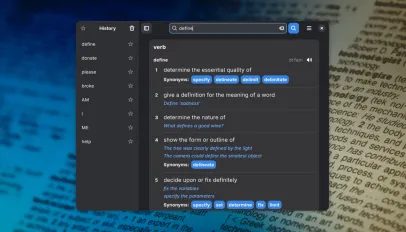
A new application called Wordbook has joined the GNOME Circle collection, offering a modern English-English dictionary that works entirely offline. The app is built on GTK4 and libadwaita, making it a natural fit for the GNOME desktop environment.
Wordbook relies on the OpenEnglish WordNet lexical database and uses eSpeak for text-to-speech pronunciation. Instead of a simple alphabetical list, the dictionary organizes words into "synsets" — groups of terms that share a common meaning. This approach allows users not only to look up definitions but also to explore semantically related words, distinguish between homonyms and near-homonyms, and find precise alternatives for writing or study.
The interface includes several practical features. A "random word" button helps users expand their vocabulary by discovering unfamiliar terms. The favorites section enables quick access to words that are looked up frequently. Full-text search is also supported, making it easier to find terms even if the exact spelling is not known.
Since all data is stored locally, Wordbook does not require an internet connection to function. This makes it particularly useful for users who work offline or prefer to minimize online dependency.
Wordbook is available for installation via Flathub and has been officially accepted into the GNOME Circle program, which means it meets the quality and design standards set by the GNOME project. The app is free and open-source, and its developers are accepting contributions and feedback through the project's repository.