Starcloud raises $250M for orbital AI data centers as launch shortage looms

Starcloud, a startup building satellites capable of running AI inference in orbit, has secured a $250 million extension to its Series A funding round, bringing the total to $420 million, the company exclusively told TechCrunch. The extension values the company at $2.3 billion, up from the $170 million round announced in March.
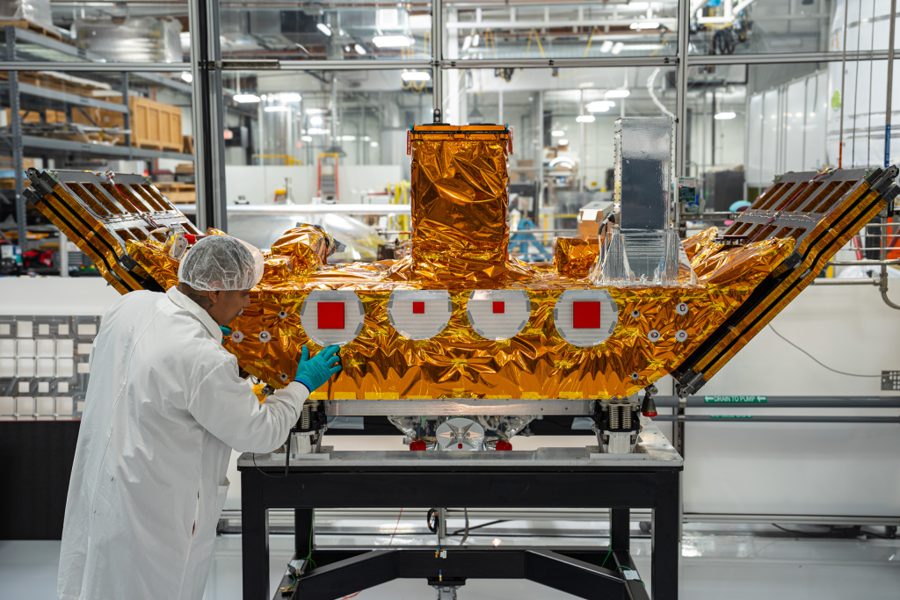
The fresh capital will fund a larger manufacturing facility and accelerate development of Starcloud-3, the company's largest orbital data center spacecraft, which is designed to launch aboard SpaceX's upcoming Starship rocket. CEO Philip Johnston said the company is stockpiling funds to secure launch capacity amid a tightening market for rocket transportation.
"We can see what's coming—we're going to need to book an enormous amount of launch," Johnston told TechCrunch. "As soon as we can, we want to get under contract with things like Starship. One of the biggest costs is now on securing your launch capacity… launch is pretty constrained right now because Falcon 9 program is scheduled to end in 2028."
Starcloud has already filed a request with the U.S. Federal Communications Commission to operate 88,000 spacecraft. Launch costs have long been a major hurdle for orbital data center startups, and the situation is intensifying. One competitor, Lumen Orbit, has decided to build its own rockets rather than rely on external providers.
SpaceX is phasing out its workhorse Falcon 9 rocket and transitioning to the much larger but still unproven Starship, creating uncertainty for satellite operators. The challenge is compounded by the fact that competing rockets — such as Blue Origin's New Glenn and United Launch Alliance's Vulcan — are not yet flying regularly, while new vehicles like Rocket Lab's Neutron have not reached the launch pad.
Johnston emphasized that securing launch capacity is now the single biggest cost driver for the company. The tight supply of rockets, combined with the planned retirement of Falcon 9, means Starcloud must act quickly to lock in contracts for future missions. The company's strategy hinges on Starship's successful development and deployment, as its large payload capacity is essential for the massive Starcloud-3 spacecraft.
The startup's approach addresses a growing demand for low-latency AI processing in space, where data from satellites can be analyzed in orbit rather than transmitted to Earth. This reduces bandwidth requirements and speeds up decision-making for applications like Earth observation, communications, and defense. However, the high cost and limited availability of launch services remain significant barriers to scaling such operations.