Molten metal levitation on ISS: how metallic glass stronger than steel is tested in zero gravity
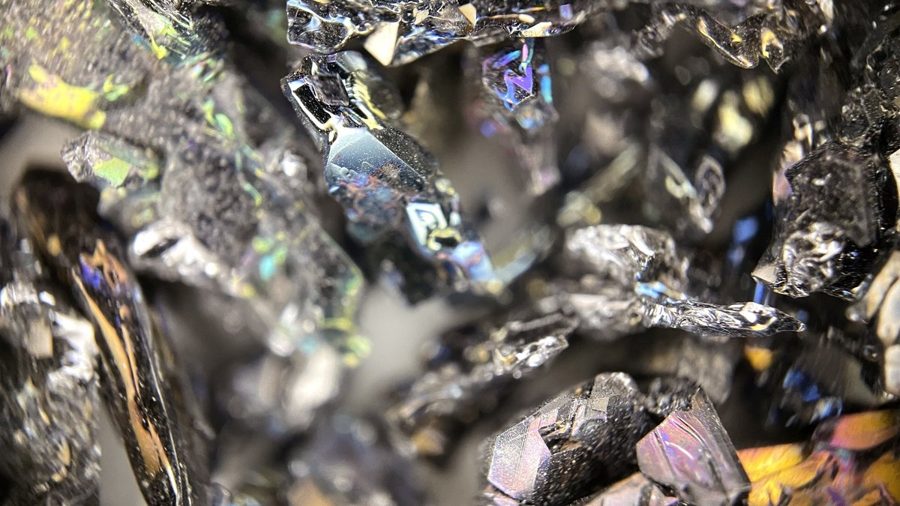
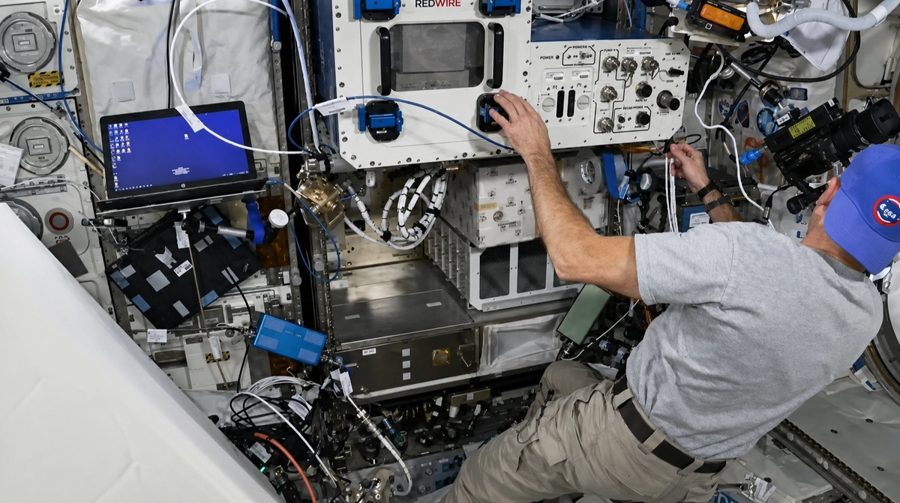
A team of materials scientists led by Ralf Busch from Saarland University (UdS) is preparing for its first scientific mission in space. Starting August 31, for one week, the researchers will remotely control experiments aboard the International Space Station (ISS) in real time. They will study unusual metal alloys called metallic glass — a material that combines strength surpassing steel with formability similar to plastic.
The experiments are conducted in collaboration with the European Space Agency (ESA) and the German Aerospace Center (DLR). The key advantage of the ISS for this research is microgravity. At an altitude of about 400 kilometers, the station is in constant free fall around Earth, creating weightlessness. Tiny droplets of molten alloy must "float" in space without touching the container walls, which would otherwise distort measurement results. On Earth, gravity causes droplets to deform, preventing scientists from accurately measuring their properties.
In ordinary metals, atoms arrange into a regular crystalline lattice. In metallic glass, the internal structure remains disordered, like in liquid glass. This gives the material unique mechanical properties: it is extremely strong yet can flow and be molded at certain temperatures. However, producing metallic glass in large volumes on Earth is difficult — the melt must be cooled extremely quickly to prevent atoms from forming crystals.
In space, scientists will levitate alloy droplets using a magnetic field, heat them with a laser to temperatures above 2000 °C, and then slowly cool them down. This allows measuring density, surface tension, and viscosity in a pure state, unaffected by container walls. The obtained data will help create computer models that accelerate the development of new alloys.
The researchers hope metallic glass will find applications in aviation, space technology, medicine, and electronics. For example, it could be used to make microscopic gears for watches or components for probes that experience less wear. The microgravity environment is the only place where such precise measurements of molten metal properties are possible without interference from gravity or container contact.