Video editor turns Wii Nunchuk into a macropad to save his wrist from keyboard strain
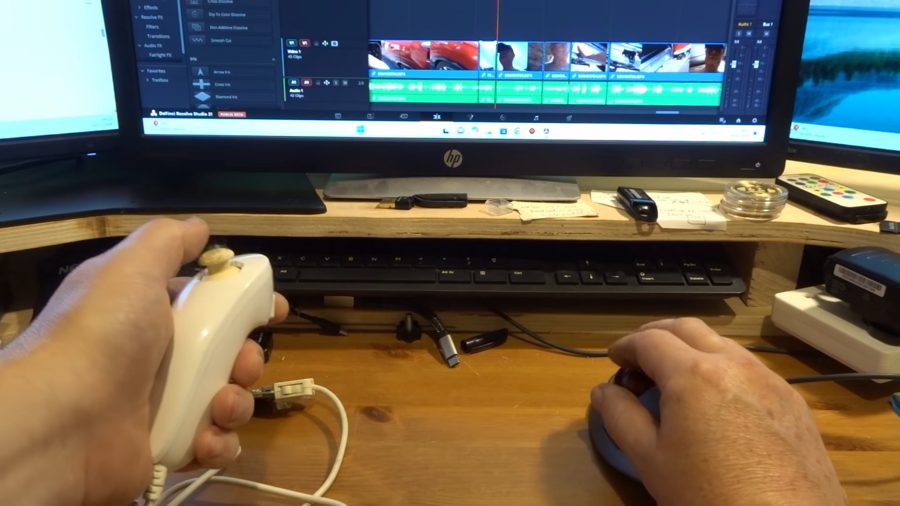
YouTuber John Dingley from the John's Projects channel has turned a Nintendo Wii Nunchuk into a video editing device. The reason was his desire to avoid wrist pain caused by constantly hitting keyboard shortcuts. He showcased the build in a video that was spotted by Hackaday.
The controller connects to a PC through the open-source Anavi Handle adapter. Inside it sits a Seeed Studio Xiao RP2040 microcontroller that costs just a couple of dollars, keeping the entire setup surprisingly affordable. Once wired up, the Nunchuk works as a macropad with assignable buttons for quick actions.
The choice of the Nunchuk wasn't about retro gaming nostalgia but practicality. The controller is light and comfortable, as it was originally designed for a family-friendly console. It can be held upright, which reduces strain on the wrist compared to hovering a hand over a keyboard. Dingley called it "one of the most ergonomic things ever made."
Currently, the buttons are mapped to four functions: the lower button splits a clip, tilting the joystick left performs a ripple delete, tilting it right undoes the previous action, and the upper button remains unassigned. Setting it up requires some coding, and the author covered that process in detail in his video.
Dingley arrived at this solution after realizing he didn't use all the keys on his regular macropad. He still keeps a keyboard nearby for typing text, but can now put the bulky macropad away. The Nunchuk's limited functionality makes this a niche setup, suitable for those who need only a handful of commands in their workflow. Professional tools like the DaVinci Speed Editor offer far more buttons, so this won't be a full replacement for complex projects.