Tesla Model Y lost 9% of battery in one year — owner says it's not a problem
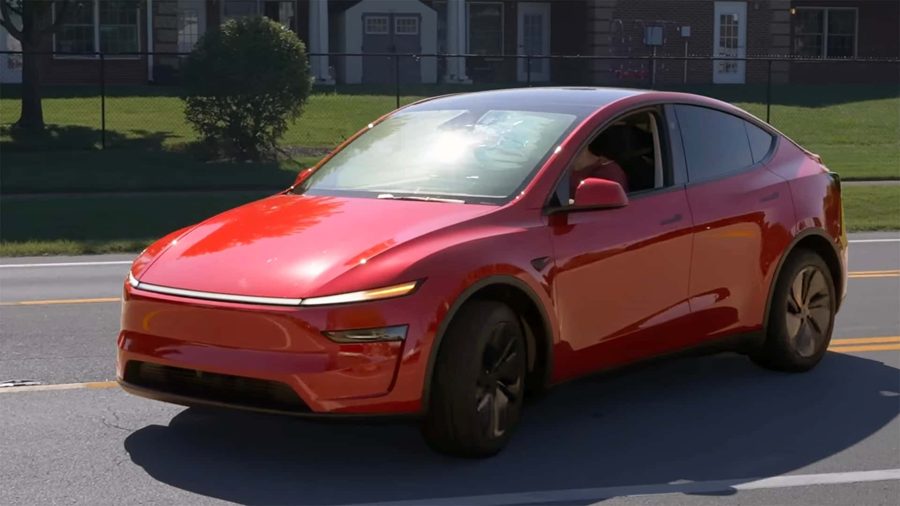
After one year and roughly 25,000 miles, the battery of a Tesla Model Y retained an estimated 91% of its original capacity, according to data collected from the vehicle. The owner, YouTuber Andy Slye, checked the health of the battery in his 2026 Tesla Model Y Premium Rear-Wheel Drive and says he sees little reason for concern.
Slye did not run Tesla's full overnight battery-health test, which requires the car to stay plugged into an AC charger for more than 16 hours while it discharges the battery to near empty and then charges it fully. Instead, he relied on Tesla's in-app diagnostic, which returned only a general "healthy" verdict.
The 91% figure comes from Recurrent, a third-party service that estimates battery health by analyzing data collected from the vehicle. It works by recording information such as the battery's state of charge, estimated range, mileage, charging activity, and temperatures, then comparing it with data from similar vehicles to produce an estimate.
Slye previously ran a range test from full charge and covered nearly 300 miles on the highway, which he says shows the car still performs well in practice. He argues that the apparent early degradation is not alarming because battery degradation in EVs is typically steepest early in the vehicle's life and then tapers off. Large-scale battery tests support this pattern, suggesting that the most significant capacity loss happens in the first year or so, after which the curve flattens considerably.
While the 9% drop might look significant on paper, Slye emphasizes that the car continues to deliver usable range well beyond what most drivers need on a daily basis. He also points out that the estimate from Recurrent is based on comparative data and may not reflect the exact state of the battery, which could be better or worse than the calculated figure. The in-app diagnostic from Tesla itself returned a positive result, adding another layer of reassurance.
The owner's stance highlights a broader trend among EV users: early battery degradation is often a source of anxiety, but real-world performance and long-term studies suggest that the initial drop is followed by a much slower decline. For Slye, the combination of a healthy diagnostic, strong range test results, and the expected degradation curve means there is no immediate cause for worry.