Qatar's spherical solar module: a ball with a reflector boosts energy yield by 71%
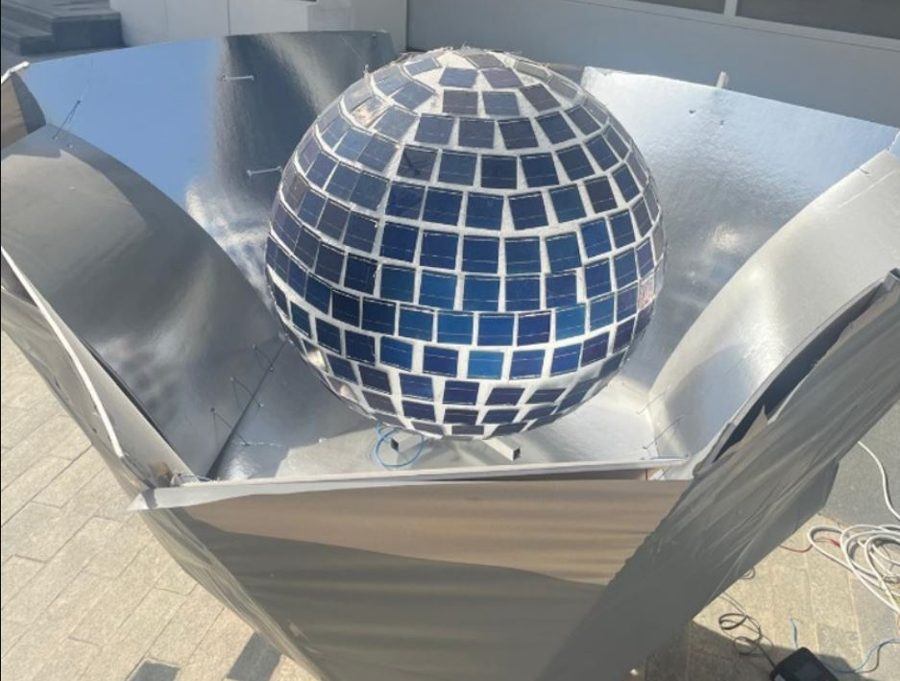
Researchers at Qatar University have built and tested a prototype spherical photovoltaic module that captures solar energy without any mechanical sun-tracking system. The device, 0.70 meters in diameter, integrates 450 monocrystalline silicon solar cells distributed across a spherical substrate and is paired with a hemispherical aluminum reflector shaped like a bowl.
Unlike conventional flat panels, which have a single dominant surface orientation, the sphere places photovoltaic cells across a continuous range of tilt and azimuth angles. Lead author Amit Handakar explained that the spherical geometry has no preferred azimuthal direction, allowing it to capture solar radiation throughout the day as the sun changes position, all without moving parts. Compared with other non-planar shapes such as cylindrical or conical configurations, the sphere also avoids favoring any particular direction, offering a distinct approach to solar collection.
The key innovation is the integration of the bowl-shaped reflector with the spherical module. The reflector redirects incoming radiation that would otherwise be lost onto different regions of the sphere's surface. According to simulations, adding the reflector increased the module's energy output by roughly 71% relative to the same spherical configuration without it. The researchers suggest the design could be particularly useful in regions with intense solar radiation, where compactness and the absence of moving components are important advantages. The prototype was experimentally demonstrated, confirming the practicality of the concept beyond theoretical modeling.