Russian physicists find way to protect quantum keys from detector blinding attacks
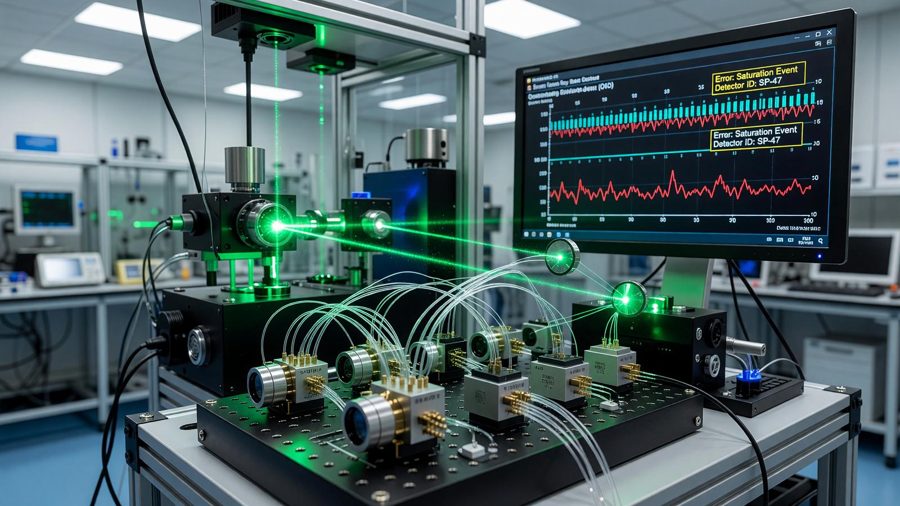
SFB Lab and the Quantum Technology Centre at Moscow State University have developed a method that detects attempts to compromise quantum key distribution systems while preserving most of the secret data. The results were published in Physical Review Applied, and the technology is protected by Russian patent No. RU 2 856 208 C1.
The issue addressed by the authors involves the so-called blinding attack. An attacker directs optical radiation at single-photon detectors, switching them into a mode where bit registration can be controlled. If the attack succeeds, an outsider gains access to the key while the error rate in the system does not rise noticeably, making the intrusion nearly invisible.
The new approach relies on randomly varying the quantum efficiency of detectors during operation. Even a slight change in this parameter causes the pulse energy required for covert device control to differ significantly between modes. If the attacker does not know the current state of the detector, their actions trigger erroneous or double triggering events.
Based on the statistics of such failures, the method calculates how many key bits could have been compromised and removes exactly those during privacy amplification. There is no need to discard the entire key. Experiments confirmed the approach works on a serial detector. The technology is designed for use with common devices and does not require changes to the receiver's optical scheme.