PCIe 6.0 SSDs finally hit the market as Marvell, Phison, and SMI ready controllers
The PCIe 6.0 specification was ratified in early 2022, but real-world implementation took years to materialize. Now the situation is changing: first PCIe Gen6 platforms are approaching release, and actual storage devices are finally coming to market.
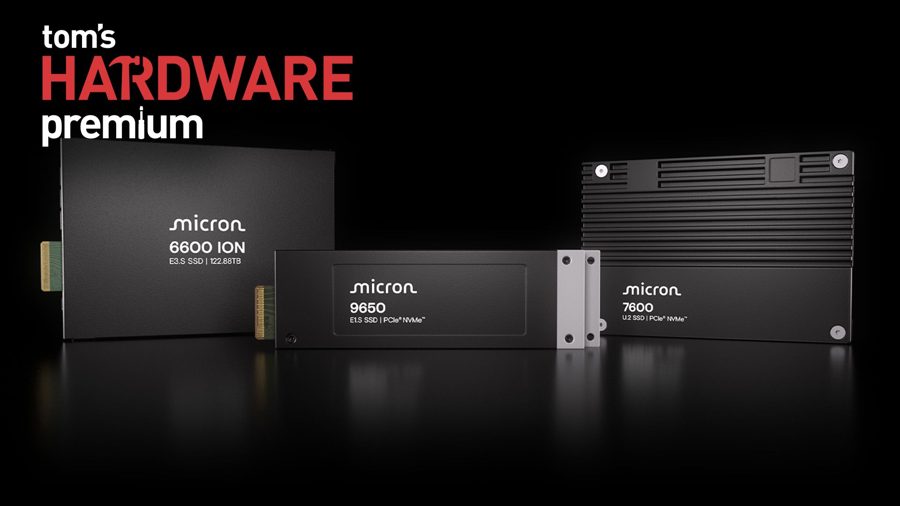
Micron was the first to unveil a PCIe 6 SSD in mid-2025, and Samsung followed suit this July. Meanwhile, independent SSD controller makers — Marvell, Phison, and Silicon Motion — are preparing their own PCIe 6 platforms for commercial use.
The shift to the new standard involves significant technical changes. PCIe interfaces from generation 1 through 5 relied on simple NRZ signaling (one bit per signal) with 128b/130b encoding, which was relatively straightforward to implement at the controller level. However, maintaining signal integrity at 32 GT/s per lane required complex methods.
PCIe 6.0 adopts PAM4 signaling, which encodes two bits per symbol using four voltage levels. The physical signaling rate stays at 32 Gbaud, but the effective transfer rate doubles to 64 GT/s because two bits are transmitted per signal instead of one. This made transmitter and receiver design considerably more complicated.
The adoption of PAM4 is not just a simple doubling of speed — it fundamentally changes how data is encoded and decoded. With four voltage levels instead of two, noise margins shrink dramatically, requiring more sophisticated error correction and signal processing. Controller vendors have had to redesign their silicon from the ground up, which partly explains the multi-year delay between spec ratification and actual products.
Despite the setbacks, the industry is now moving toward commercial deployment of PCIe 6.0. Drives from Micron and Samsung already exist, with the former shipping its product first. Controllers from Marvell, Phison, and Silicon Motion are in active development, and their arrival will enable a broader ecosystem of PCIe 6 storage devices.
The first PCIe Gen6 platforms are expected to target data centers and enterprise workloads, where the doubled bandwidth can be fully utilized. Consumer adoption will likely follow later, once the technology matures and costs come down. For now, the focus is on bringing the new generation to market after years of delays, and the pieces are finally falling into place.