One TV setting changes picture quality instantly — and it's not the store mode
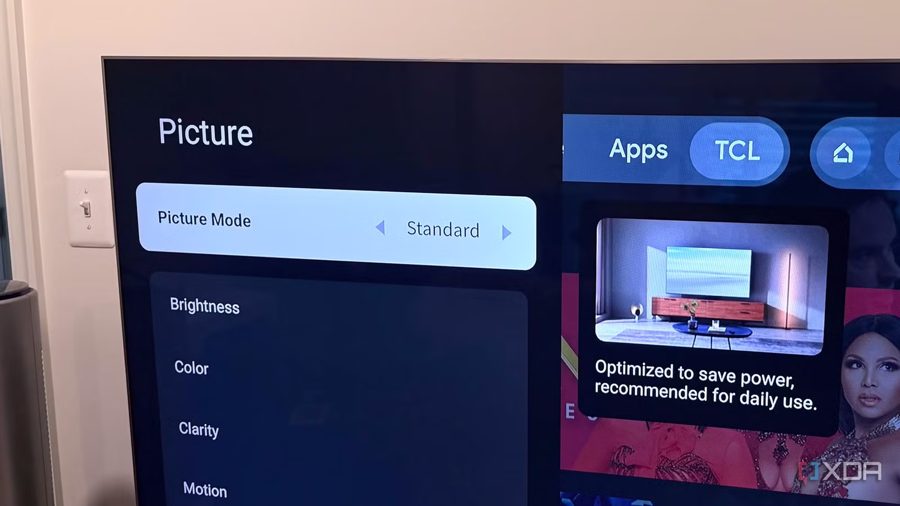
Even a professional display reviewer can get TV settings wrong. The author of the article, who writes about display technology for a living, admitted that his own TV ran in factory picture mode for nearly a year. He had spent weeks agonizing over panel types, budget, and peak brightness numbers, but when the TV arrived, he simply plugged it in and ignored the settings. To be fair, he uses an Apple TV 4K set to Dolby Vision mode for movies, which may have masked the poor default settings. But the point remains: a TV ships in the worst possible state. Well, maybe second-worst, because the ultra-bright vivid mode used in showrooms is even worse.
Manufacturers pour engineering hours into hitting reference color targets, then ship the TV in a mode that throws most of that work away. There are various reasons for this, but the result is the same: viewers are not seeing the picture as intended.
Filmmaker Mode is the one setting that everyone agrees on. If you change nothing else, this is the one to enable. Ask any reviewer, professional calibrator, or AVS Forum regular what the most accurate out-of-the-box picture mode is, and they will all, surprisingly, agree on Filmmaker Mode. These are people who rarely agree on anything, so this is high praise. If your TV does not have Filmmaker Mode, Movie or Cinema modes are the next best option — they offer the most adjustment dials, and many TV review sites start their testing from these modes.
What makes Filmmaker Mode different is that it is not set by any single manufacturer. It is an industry standard defined by the UHD Alliance in 2020, so it behaves the same on LG, Samsung, Hisense, or TCL, and on QLED or OLED. The mode locks the white point to 6500K, disables motion interpolation (the smoothing effect that creates the "soap opera effect"), turns off sharpness and noise reduction, and sets gamma to 2.4. This is how content creators saw their work on reference monitors — without any additional processing. The result is a picture that is more accurate to the director's intent, with natural colors, proper contrast, and smooth motion that matches the original film or broadcast frame rate.