Levitating gyroscope spins for 10 hours — could replace GPS underground
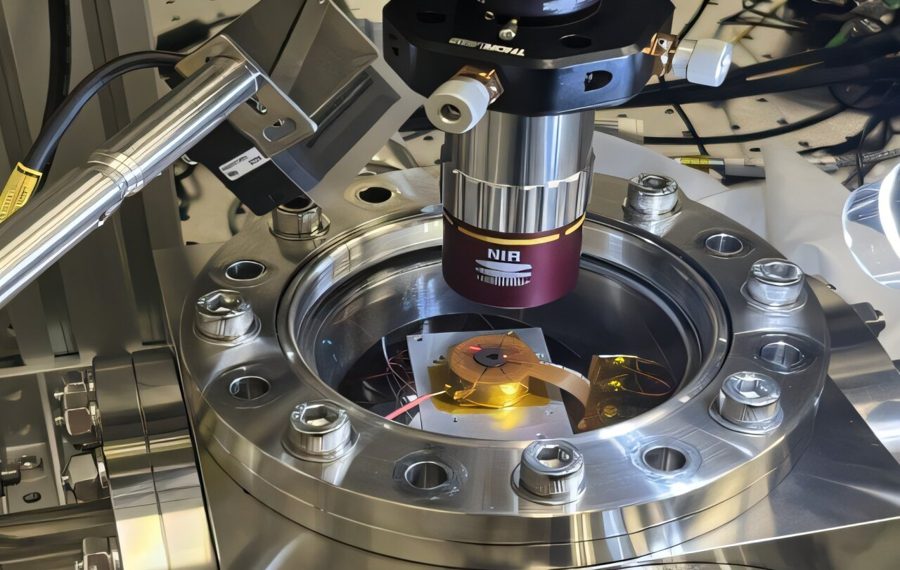
Researchers at Singapore's A*STAR Centre for Quantum Innovation (Q.InC) have developed a millimetre-sized levitating rotor that kept spinning for more than 10 hours after its drive was switched off. According to the team, this is the lowest energy loss ever recorded for a mechanical rotor of that size. The findings were published in Nature Communications.
The rotor is part of a platform the researchers used to demonstrate commercial-grade gyroscope sensitivity. The technology could enable navigation in places where GPS signals are unavailable, including underground or underwater environments.
The study addresses a long-standing problem in diamagnetic levitation. Mechanical systems that lose very little energy can detect extremely weak forces and movements, which makes them well suited for precision sensing. While levitation removes friction caused by physical contact, diamagnetic levitation has historically been held back by eddy-current damping — a mechanism that prevented the systems from reaching the required level of precision.
The new approach overcomes this limitation and provides a foundation for ultra-sensitive sensing technologies. Gyroscopes built around this principle may be used in navigation systems that operate independently of satellite signals, as well as in other applications demanding highly accurate measurements.
The project was carried out under Singapore's flagship Research, Innovation and Enterprise programme focused on semiconductors. The researchers believe the platform opens the door to a new class of precision instruments capable of working in environments where conventional positioning systems fail.