Grok 4.6 spent 48 hours building a full 3D shooter without any human help
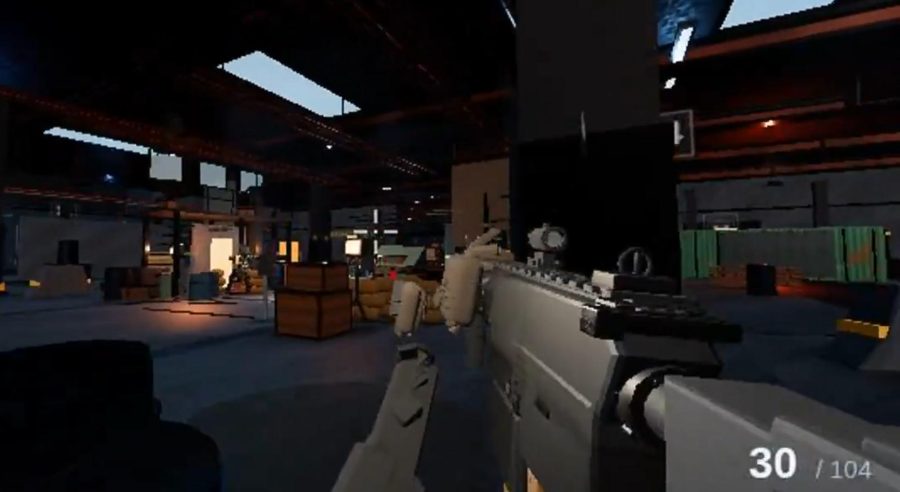
Elon Musk has highlighted an experiment in which the Grok 4.6 neural network independently developed a first-person 3D shooter. The model worked continuously for about 48 hours, and the result was a playable project featuring a three-dimensional environment, weapons, shooting, movement, and reloading mechanics. The experiment was conducted by Matt Schumer, who published a video showing the outcome.
The key to the success was a mode called Gauntlet Loops, or "trial loops." This is an autonomous AI agent mode in which the neural network works without human intervention, cyclically creating, testing, and fixing code or content while tackling complex tasks step by step. This approach allowed the model to bring the game to a working state after two days of uninterrupted operation.
Earlier, SpaceX introduced Grok 4.6, and Elon Musk stated that it is "objectively #1 in terms of intelligence, speed, and cost." This is not the first time Grok models have created games. Back in 2025, Grok 4 generated a Doom-style shooter from a single request, and Musk announced a feature that would allow AI not only to write games but also to test them independently by analyzing what happens on the screen.
With the release of the Grok Build tool, autonomous capabilities have expanded further: a single prompt produced a browser-based arcade racing game in a cyberpunk style, complete with multiple tracks, car selection, and working physics. The current Gauntlet Loops experiment demonstrates the next step — longer autonomous work without any human involvement.
The implications of this experiment go beyond a single game. Continuous autonomous operation means AI models can now handle multi-day development cycles, iterating on their own output until the result meets the requirements. This shifts the role of a programmer from writing every line of code to defining the goal and letting the AI work through the details. For the gaming industry, this could mean faster prototyping and lower production costs, though it also raises questions about quality control and creative oversight in fully automated pipelines.