First global standard for solid-state batteries: 0.5% weight loss after 6 hours at 120°C
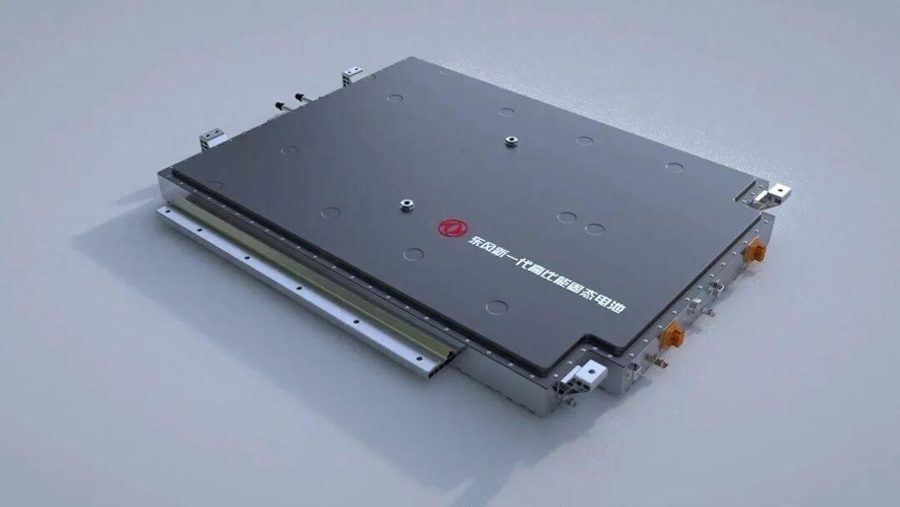
The International Electrotechnical Commission (IEC) has approved the world's first international standard for solid-state lithium-ion batteries designed for electric vehicles. The document, titled "Guidelines for application, test tasks and conditions for solid-state lithium-ion batteries for electric vehicles," was proposed under China's leadership with contributions from experts in France, South Korea, Japan, and other countries.
The standard establishes a strict criterion for classifying a battery as solid-state. To qualify, the battery must lose no more than 0.5% of its weight after being heated to 120°C for six hours. This requirement is intended to distinguish genuine solid-state batteries from hybrid solutions that use gel-like or semi-solid electrolytes. The measure sets a clear "hard threshold" for the industry, preventing manufacturers from marketing quasi-solid-state products as fully solid-state ones.
Solid-state batteries are widely regarded as a critical direction for the next generation of lithium-ion technology. Compared to traditional liquid-electrolyte batteries, they offer longer service life, higher safety, and more stable performance under various operating conditions. The absence of flammable liquid electrolytes significantly reduces the risk of thermal runaway and fire, making solid-state batteries particularly attractive for electric vehicles.
The development of this international standard is expected to facilitate the global exchange of advanced battery technologies, particularly those pioneered in China. According to the IEC, the standard will contribute to the technological modernization of the global battery industry and support the broader energy transition toward electrification.
China previously published the world's first draft national standard for solid-state batteries in December 2025, which underwent public consultation. That standard was officially implemented in July 2026, directly setting a "rigid threshold" for domestic manufacturers. The new IEC standard effectively extends similar requirements to the international level, creating a unified benchmark for the industry worldwide.
The adoption of this standard marks a significant step toward commercializing solid-state battery technology. By providing clear definitions and testing protocols, it helps automakers, battery manufacturers, and regulators align on what constitutes a true solid-state battery, reducing ambiguity in product claims and accelerating the development of safer, more efficient energy storage solutions for electric vehicles.