China's Chang'e 7 to attempt first-ever landing at moon's south pole, hunt for water ice
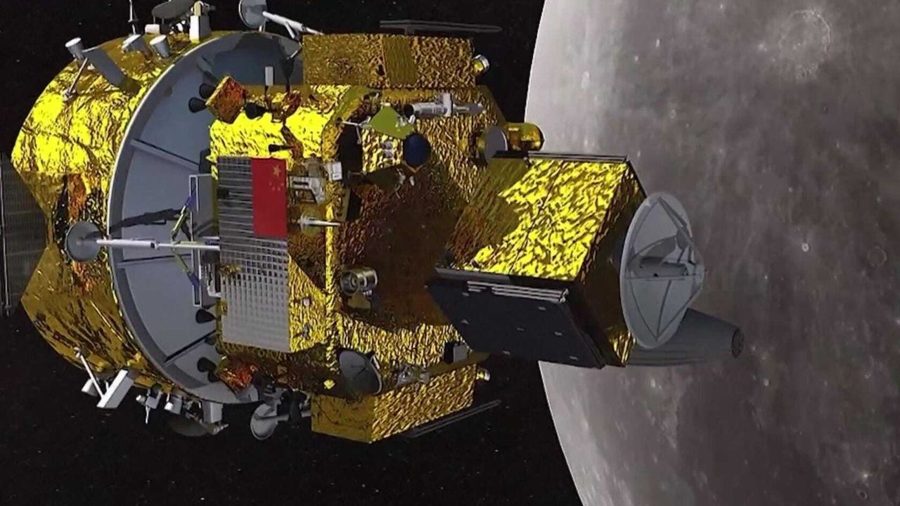
China is set to launch its most ambitious lunar mission yet, Chang'e 7, which will attempt the first-ever landing directly at the moon's south pole and search for water ice in permanently shadowed craters. The mission is scheduled to lift off on a Long March 5 rocket from the coastal Wenchang Space Launch Site on Hainan Island, with the launch window opening on the morning of August 24 local time (the evening of August 23 EDT).
The spacecraft will take up to six days to reach lunar orbit, where it will then spend two months preparing for a landing planned for November. The mission aims for a near bull's-eye on the lunar south pole. The payload includes an orbiter, a lander carrying a rover, and a novel "hopping" robot capable of moving across the surface in short jumps. The lander will target Shackleton Crater, a 21-kilometer-wide pit whose rim grazes the moon's south pole. No other spacecraft has ever landed so close to the pole.
This proximity will allow Chang'e 7 to prospect for water ice trapped in smaller depressions near Shackleton that, because of the moon's tilt, never see sunlight and maintain temperatures just a few dozen degrees above absolute zero. Such conditions are ideal for preserving water ice, which could be a critical resource for future lunar bases.
Norbert Schorghofer, a senior scientist at the Planetary Science Institute based in Hawaii, described the mission as "amazing" and noted that no landed mission has ever searched for water on the moon. If successful, he said, China "will be the leader in lunar science." The mission also includes instruments from several international partners, highlighting China's growing global influence both on Earth and in space exploration.
The Chang'e 7 mission is part of China's broader lunar exploration program, which includes the Chang'e 5 sample-return mission and the upcoming Chang'e 8, which will test technologies for in-situ resource utilization. The search for water ice at the south pole is particularly significant because it could provide drinking water, breathable oxygen, and rocket fuel for future crewed missions, potentially enabling a sustained human presence on the moon.