Anthro Energy breaks ground on a US factory making electrolytes for 300,000 EVs — a boost for solid-state batteries
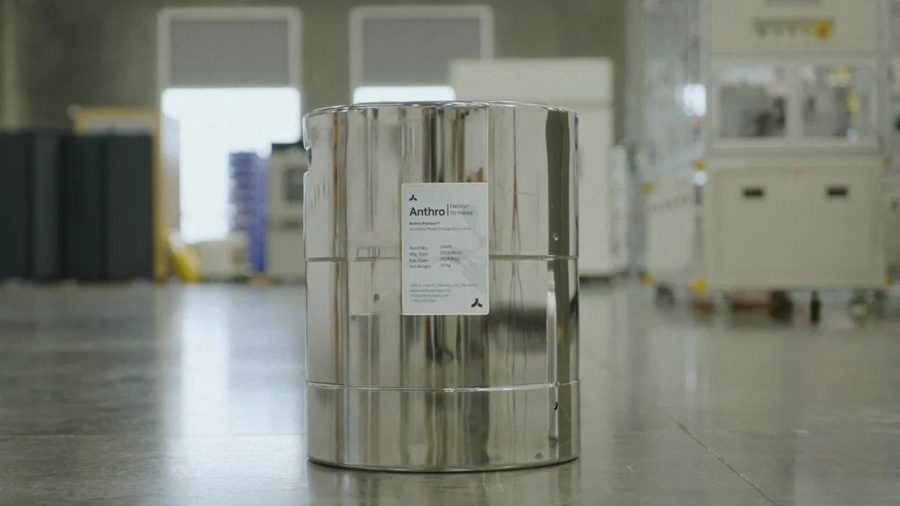
Anthro Energy broke ground on a factory in Louisville, Kentucky, on Tuesday. The facility will produce enough electrolytes for more than 300,000 electric vehicles — 25 GWh per year — with production scheduled to start in 2028.
But the headline output is only part of the story. The factory is designed to supply U.S. battery makers with materials that are not tied to "foreign entities of concern" (FEOC), a term used by the U.S. government for companies controlled by China. Battery manufacturers are scouring the globe for alternatives to Chinese-dominated supply chains, and Anthro hopes its Kentucky plant will fill that gap.
"When it opens, we'll be serving domestic, high-spec customers, this emerging ecosystem for battery production where they frankly just need electrolytes — a domestic source of China-free supply, FEOC-free supply," David Mackanic, co-founder and CEO of Anthro Energy, told TechCrunch in an exclusive interview.
The startup, which raised its first funding round just four years ago, wants the factory to become a key node in the emerging U.S. battery supply chain. Mackanic noted that "within a 12-hour drive, you can get to 70% of the battery production facilities in the United States that exist today."
To build the factory, Anthro received a $24.9 million award from the U.S. Department of Energy under the Bipartisan Infrastructure Law, and an additional $18.4 million in investment tax credits under the Inflation Reduction Act. Kentucky contributed $2.3 million in tax incentives in exchange for the creation of 110 permanent jobs.
The factory is expected to give a significant boost to solid-state battery development in the U.S., as advanced electrolyte formulations are a critical component for next-generation battery technologies that promise higher energy density and improved safety compared to conventional lithium-ion cells. By providing a domestic, FEOC-free supply of electrolytes, Anthro aims to reduce dependence on Chinese imports and accelerate the timeline for commercializing solid-state batteries by American manufacturers. The company is already in talks with several U.S. battery makers and automakers to secure long-term supply agreements, according to Mackanic, who declined to name specific partners.