Wi-Fi 8 won't be faster — and that's exactly why your home network needs it
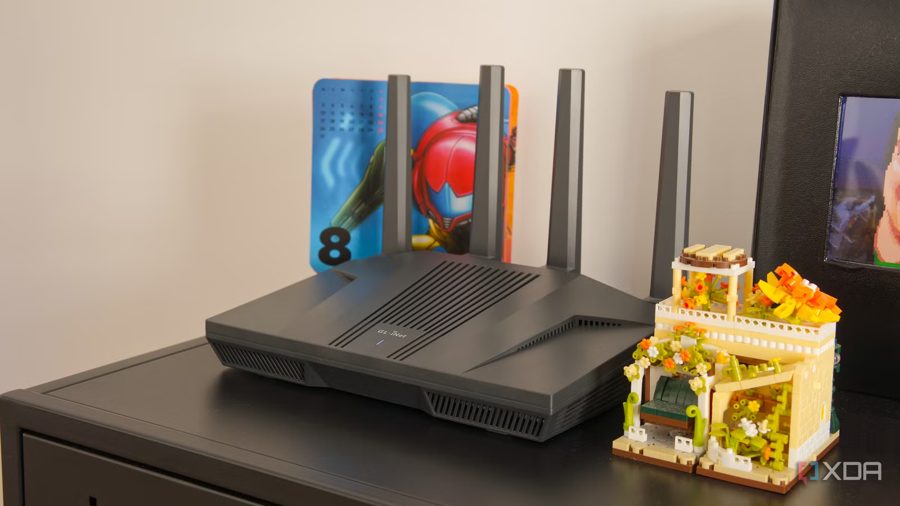
For the past 15 years, every new generation of Wi-Fi has followed the same playbook: promise more speed, more bandwidth, and better range. From Wi-Fi 4 (802.11n) in 2009 to Wi-Fi 7 today, the maximum theoretical data rate has increased dramatically with each iteration — Wi-Fi 5 brought a tenfold jump, and subsequent versions kept pushing the numbers higher. But with Wi-Fi 8, the industry is taking a fundamentally different approach.
The IEEE has designated Wi-Fi 8 under the working title "Ultra High Reliability" (UHR), signaling a shift in priorities. For the first time since the introduction of Wi-Fi 4, raw speed is no longer the primary goal. Wi-Fi 7 already offers up to 23 Gbit/s per band, which far exceeds the typical internet connection speeds available to most households. Chasing higher theoretical throughput has become increasingly irrelevant for real-world use.
Instead, Wi-Fi 8 will maintain roughly the same maximum data rate as its predecessor. The focus is now on reliability, stability, and consistent performance in challenging environments — particularly in dense urban areas where dozens of overlapping networks, interference from neighboring access points, and a growing number of connected devices degrade the user experience.
The new standard aims to address these issues through several key improvements. Coordinated transmission between multiple access points will reduce interference and improve signal quality. Enhanced channel management and smarter resource allocation should minimize packet loss and latency spikes. The result, according to early documentation, is a network that feels more responsive and stable — fewer dropped video calls, less buffering during streaming, and smoother online gaming sessions, even in congested areas.
Wi-Fi 8 is still in the early stages of development, with final specifications not expected until at least 2028. However, the direction is clear: the next major wireless upgrade is not about speed on paper, but about the quality of the connection you actually experience. It may be the first Wi-Fi generation in over a decade that users will notice not because of a number on a box, but because their home network simply works better.