Why Fighter Jets Have Yellow Canopies: It’s Not a Design Choice
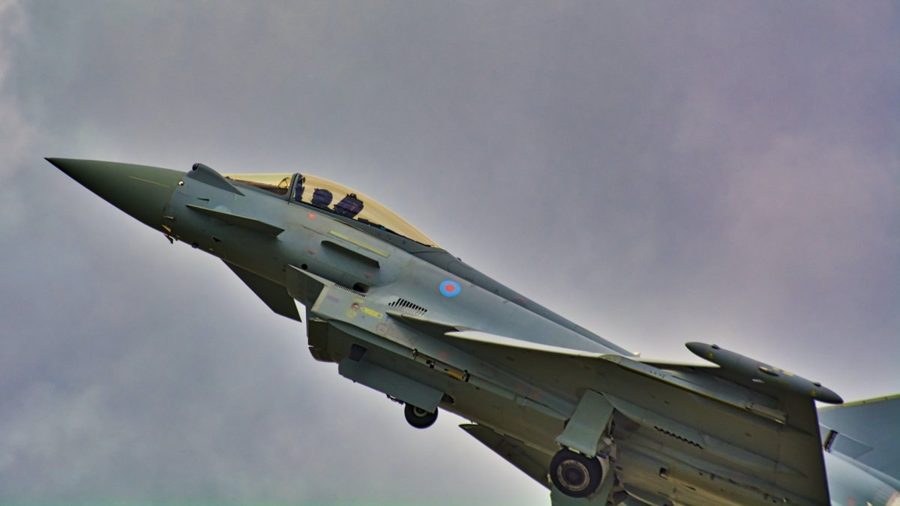
If you look closely at modern fighter jets, you may notice that their cockpit canopies often have a distinct yellowish tint. This is not a stylistic decision or a simple sun filter. The yellow hue is a byproduct of advanced engineering solutions that address two critical military requirements: thermal resistance and low radar detectability.
The primary reason for the yellow color lies in the need for extreme heat resistance. When a fighter jet flies at supersonic speeds, the air around the aircraft is compressed adiabatically. This process, familiar from basic physics, causes the air molecules to accelerate and the temperature to rise sharply. As a result, the surface of the canopy can heat up to 180 °C. Standard organic glass, used in older aircraft, cannot withstand such thermal loads. To cope with this, manufacturers use special heat-resistant materials. These materials incorporate metal oxides, such as cerium oxide, which absorb ultraviolet and infrared radiation. These same oxides give the glass its characteristic yellow tint. Without them, the canopy would quickly degrade under the intense heat generated by supersonic flight.
The second, equally important function of the yellow-tinted canopy is radar stealth. Modern warplanes are designed to have a low radar cross-section. The cockpit, with its metal pilot helmet, ejection seat, and instrument panel, creates a so-called "corner reflector" — a geometric shape that strongly reflects radar waves back to the source. To counter this, the canopy is coated with a thin, transparent metallic layer, typically made of indium tin oxide (ITO). This layer acts as both an optical filter and a radar shield. It is transparent enough for the pilot to see through, but it effectively reflects radio waves, preventing the radar from "seeing" the metal components inside the cockpit. This coating is what gives the canopy its yellowish or sometimes slightly golden appearance.
In summary, the yellow color of a fighter jet's canopy is a visual indicator of a sophisticated engineering trade-off. It is the result of combining heat-resistant metal oxides and radar-absorbing or reflecting coatings. The technology simultaneously protects the pilot from extreme temperatures and makes the aircraft significantly harder to detect on enemy radar screens. What looks like a simple design quirk is, in fact, a crucial element of modern aerial combat survivability.