Wave Overhangs: A New Support-Free 3D Printing Technique Tackles Complex Geometry
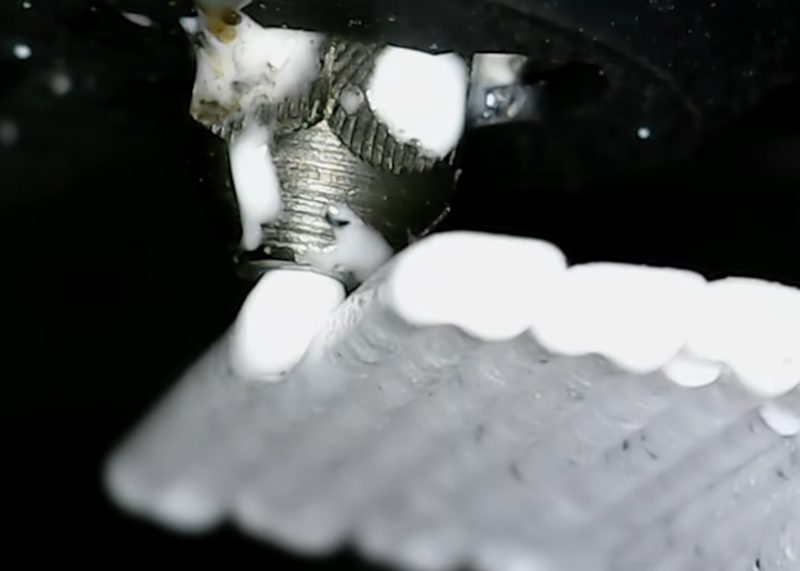
The 3D printing community continues to explore methods for printing horizontal overhangs without support structures. Earlier techniques, such as arc overhangs, have been developed, but they suffer from a notable drawback: small dimples appear at the center of each arc. A new approach, called wave overhangs, aims to solve this problem by replacing arcs with wave patterns.
The core idea is to teach the slicer to avoid drawing overhangs in mid-air. Instead, when the slicer detects a horizontal overhang, it attempts to "grow" the overhang from the main part of the model. For instance, imagine printing the letter "T" vertically. The vertical stem prints without issue, but the horizontal arms typically require support. With wave overhangs, the arms can be printed starting from the stem, with slight overlapping, allowing them to extend outward while clinging to either the stem or the previous overhang line.
This technique works well for simple cases, but arc overhangs handle more complex geometries. However, arcs leave small dimples at the center of each curve. The breakthrough of wave overhangs is to replace arcs with waves, similar to ripples spreading across a pond. These waves diffract around holes and corners, enabling the slicer to fill complex shapes without support structures.
The method is not yet perfect. Researchers are still experimenting with settings, and there is a reported increase in warping. Those interested in testing the technique can download a fork of the Orca slicer and contribute their findings to the community. More details are available in the accompanying research paper, and the software is ready for hands-on experimentation. The community is encouraged to share results and feedback to refine the process further.