US Senate confirms new chiefs for military space acquisition and spy satellites
The US Senate confirmed Erich Hernandez-Baquero to oversee military space acquisition and Roger Mason to lead the National Reconnaissance Office, putting two industry veterans in charge of major parts of America's national security space enterprise as Washington accelerates satellite spending and overhauls its buying practices.
The vote on August 7 passed 51-47 among a large group of civilian nominees. A day earlier, the Senate confirmed General Douglas Schiess as a four-star general and the next chief of space operations. Together, the confirmations install new leaders at three organizations responsible for defining military space requirements, acquiring Space Force systems, and operating the nation's intelligence satellites.
Hernandez-Baquero becomes assistant secretary of the Air Force for space acquisition and integration, making him the senior civilian official responsible for much of the Space Force's acquisition enterprise. He takes office as the service seeks a record $71.1 billion fiscal 2027 budget and reorganizes acquisition programs around mission-focused Portfolio Acquisition Executives, or PAEs, intended to push authority closer to officials responsible for delivering operational capability.
A retired Air Force colonel, Hernandez-Baquero joins from Raytheon, where he was vice president for space intelligence, surveillance and reconnaissance. He previously held several acquisition positions at the NRO, including senior leadership roles overseeing command-and-control and data-processing systems.
His arrival gives the Space Force its first Senate-confirmed acquisition executive since Frank Calvelli left the government in January 2025. Hernandez-Baquero inherits an acquisition structure that has changed substantially in the interim, with traditional program executive offices being reorganized under PAEs responsible for broader mission areas rather than individual programs.
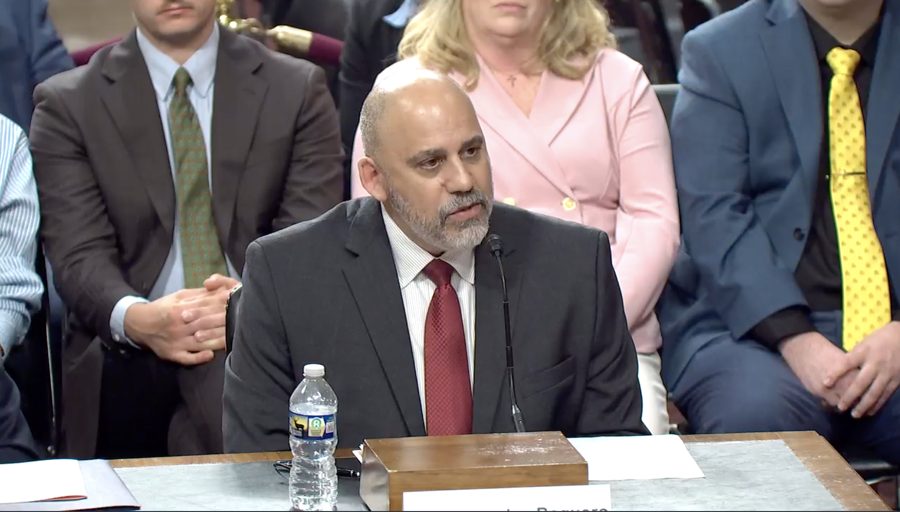
During his July confirmation hearing, Hernandez-Baquero said his priorities would be acquisition reform, integration across missions and rebuilding the acquisition workforce. He said the new structure should be judged by whether it delivers integrated capabilities to military operators rather than individual satellites or ground systems.
Mason, meanwhile, takes control of an NRO that is already in the midst of one of the largest architectural changes in its history. The aging satellite constellation and new threats demand a rethink of how intelligence systems are built and operated.