Unexpected G1 magnetic storm hits Earth on August 18 — scientists puzzled by cause
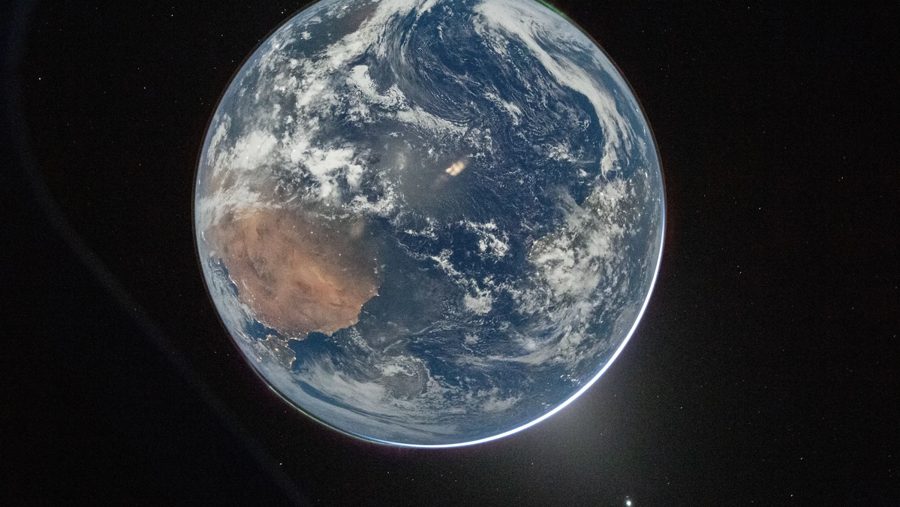
A global-scale magnetic storm unexpectedly began on Earth on the morning of August 18, catching scientists off guard. The geomagnetic event was recorded between 7 and 8 AM Moscow time, and by 9 AM its intensity had reached the G1 level, classified as a weak storm, according to the Laboratory of Solar Astronomy at the Institute of Terrestrial Magnetism, Ionosphere and Radio Wave Propagation (IZMIRAN) and the Institute of Solar-Terrestrial Physics (ISZF).
Just a day earlier, researchers had forecast only minor geomagnetic disturbances, not a full-blown storm. The parameters of the solar wind in Earth's vicinity had remained at low values for an extended period, making it unclear what exactly triggered the planet's magnetic field to transition into a storm state. The sudden onset has left scientists searching for an explanation, as the typical precursors — such as a coronal mass ejection or a sustained high-speed solar wind stream — were not apparent in the lead-up to the event.
August has already proven to be a notably active month in terms of geomagnetic activity. The storm on August 18 marks the third such event in the first 18 days of the month, following previous storms observed on August 2 and August 8. Despite this frequency, solar activity remains relatively low. All three storms have been moderate so far, none reaching the G2 level on the five-point scale, where G5 represents the most extreme category. The persistence of these storms despite low solar activity is an anomaly that researchers are still analyzing.
The current storm is expected to be short-lived. According to the forecast, Earth's magnetic field should return to a weakly disturbed state by noon Moscow time. However, full stabilization of the geomagnetic environment may take an additional 2 to 3 days. The laboratory noted that the planet is currently under the influence of a large coronal hole — a region on the Sun's surface where the magnetic field opens into space, allowing high-speed solar wind to escape. While the influence of this coronal hole is being monitored, its exact role in triggering the storm remains under investigation. Scientists continue to observe the situation, as the unusual nature of the event raises questions about the current state of solar-terrestrial interactions.