Smartphone Becomes a Keyboard Without Bluetooth or Wi-Fi: Sound via Browser
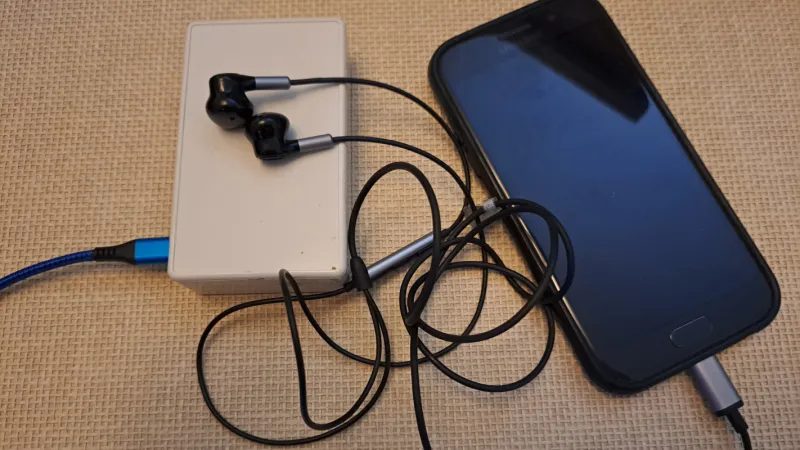
A smartphone can serve as a full-fledged keyboard for a computer by transmitting typed text through audio signals. An enthusiast known as has built a device that bypasses the limitations of mobile operating systems and connects to a PC over USB.
The idea is that a user opens a dedicated page in the smartphone's browser and types text there. The entered characters are converted into a series of audible pulses, which are sent to a receiver. The latter consists of an Arduino Micro board with a microphone: it decodes the signals and forwards the text to the computer as a standard USB input device. The choice of the Arduino Micro stems from its built-in USB chip, which simplifies implementation.
The transmission protocol was designed by the project's author as well. It supports variable-length messages: the device determines when the text ends and automatically sends it to memory. It also includes data integrity checks and link status monitoring between the smartphone and the receiver.
This approach helps overcome the restrictions of mobile platforms, which typically do not allow direct interaction with external hardware via USB-C without specialized software and drivers. Unlike single-board computers with GPIO and standard Linux, smartphones remain closed systems where running custom programs and connecting peripherals is cumbersome.
As a demonstration, has already built a password manager on top of this system. The project covers both hardware and software parts, making it a complete solution for those who want to use a smartphone as a peripheral without complex setup.