RAM prices return to 2007 levels as AI demand creates DRAM shortage
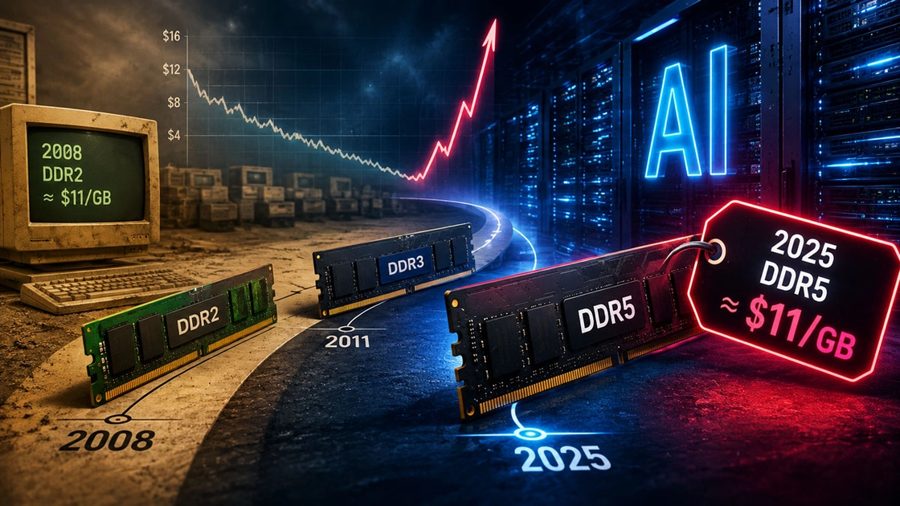
RAM prices have stopped following the usual trend of technology getting cheaper. According to calculations by professor Daniel Lemire, the cost per gigabyte of DRAM is now comparable to 2007 figures, setting the market back roughly twenty years. This marks the first such case in the modern history of the semiconductor industry.
The anomaly is attributed to the artificial intelligence boom. Large language models require high-bandwidth HBM memory, which brings manufacturers significantly more profit than conventional modules. Samsung, SK Hynix and Micron have shifted production lines toward HBM for NVIDIA servers, leaving the consumer segment effectively without priority.
A 64GB server module now costs a buyer approximately the same as an equivalent capacity did in the late 2000s, adjusted for purchasing power. Meanwhile, SSD drives continue to get cheaper at the usual pace. Flash memory pricing maintains its downward trend, while DRAM has shown stagnation for over a decade.
The cause lies in limited manufacturing capacity. As demand for server solutions grows exponentially, regular users remain at the end of the supply queue. Manufacturers choose to prioritize highly profitable data center orders, creating an artificial shortage in the retail memory market.