RAID won't save your data: why ZFS snapshots matter more than disk redundancy levels
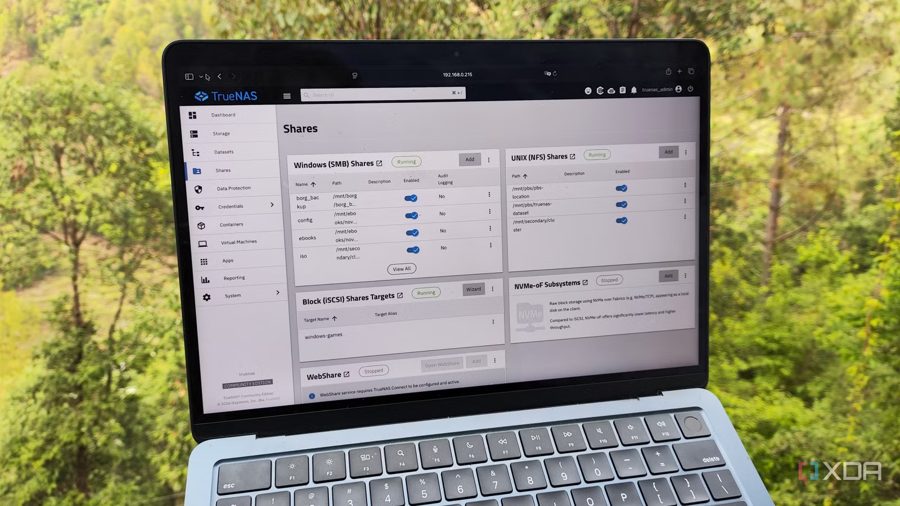
An experienced NAS user who built their first storage server from an old PC has concluded that ZFS snapshots and their replication capabilities are far more critical than the RAID level they once obsessed over. After learning the individual merits of network protocols like SMB, NFS, and iSCSI for home lab tasks, they realized that RAID, despite its appeal to beginners, is not a substitute for backups.
One of the biggest misconceptions in NAS communities is that RAID setups are equivalent to backups. Leaving aside RAID 0, which most people should not consider anyway, RAID 1 and higher levels can ensure your NAS remains operational if a storage drive fails. However, RAID's primary purpose is maintaining high availability and preventing downtime, not protecting the data itself. For example, in a RAID 1 configuration with two drives, ZFS mirrors the contents of the first drive onto the second. If you accidentally delete a file, this operation gets synced on the mirrored drive, and the file is lost on both.
RAID does not protect against accidental deletion, controller failure, file system corruption, ransomware attacks, or physical theft of the device. For recovery in such scenarios, ZFS snapshots are essential. They allow you to roll back the system to a previous state and function as a versioning mechanism, requiring no additional space until data changes. Snapshots are also useful for replication to a remote server, providing geographic redundancy.
Unlike RAID, which only protects against disk failure, snapshots protect against logical errors and human factors. The user emphasizes that spending years with TrueNAS taught them to focus on ZFS snapshots and their replication functionality first and foremost. When setting up a NAS, it is advisable to configure snapshots and their replication before choosing a RAID level, as the latter is far less important than commonly believed.