New zinc-ion battery electrode hits 368.7 mAh/g without lithium — and here's how
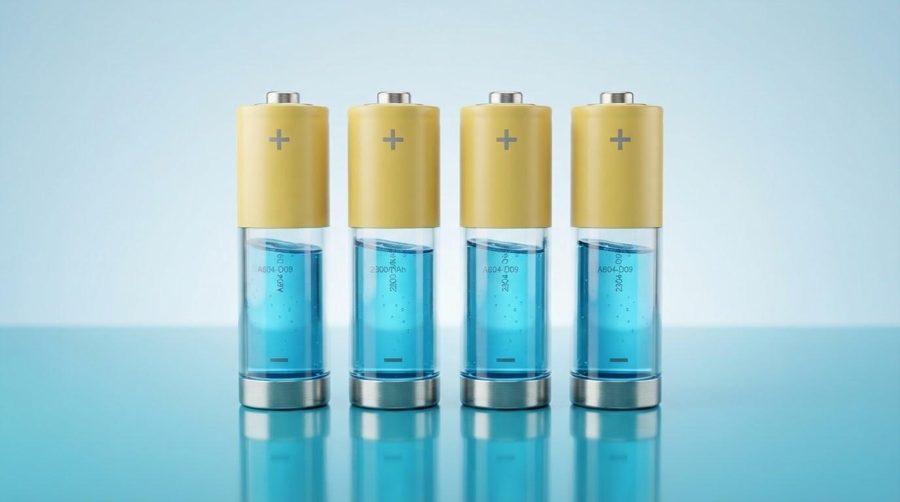
Researchers at the Korea Advanced Institute of Science and Technology (KAIST) have developed a new electrode for aqueous zinc-ion batteries that achieves a capacity of 368.7 mAh/g while maintaining fast charging rates. The breakthrough relies on an unusual sequence of particle accumulation: zinc ions enter the electrode first, followed by protons.
Aqueous zinc-ion batteries are considered a promising alternative to lithium-ion batteries for stationary energy storage systems. They use a water-based, non-flammable electrolyte and relatively inexpensive zinc, making them potentially safer and cheaper than conventional lithium-based systems. However, the technology has been hampered by insufficient energy density and problems during fast charging.
Protons present in the aqueous electrolyte have been particularly challenging. Due to their high mobility, they can participate in unwanted side reactions, forming byproducts on the electrode surface and degrading battery performance.
The KAIST team decided not to block protons but instead turned them into an additional energy storage mechanism. To do this, the scientists created a two-dimensional metal-organic framework — a porous structure formed from metal ions and organic molecules. They embedded special voltage-dependent amino groups into the microscopic pores of the material. At higher voltages, these groups activate and begin actively attracting protons, creating a so-called "stones and sand" effect: larger zinc ions enter the pores first, and then the remaining voids are filled with protons.
"This approach allows us to simultaneously utilize both zinc ions and protons for energy storage, significantly increasing capacity without sacrificing charging speed," the researchers explained. The dual-ion storage mechanism effectively doubles the useful space inside the electrode material.
The new electrode design addresses two major limitations of aqueous zinc-ion batteries at once: low energy density and poor fast-charging performance. By converting problematic protons into a productive part of the storage process, the team eliminated the main source of side reactions while boosting overall capacity.
The development could accelerate the adoption of aqueous zinc-ion batteries in stationary energy storage applications, where safety and cost are critical factors. Unlike lithium-ion systems, these batteries require no flammable electrolytes and rely on abundant, cheap materials. The researchers believe their approach could be adapted to other types of metal-ion batteries as well, potentially improving performance across a range of energy storage technologies.