NASA rover finds corundum on Mars — the mineral behind rubies and sapphires
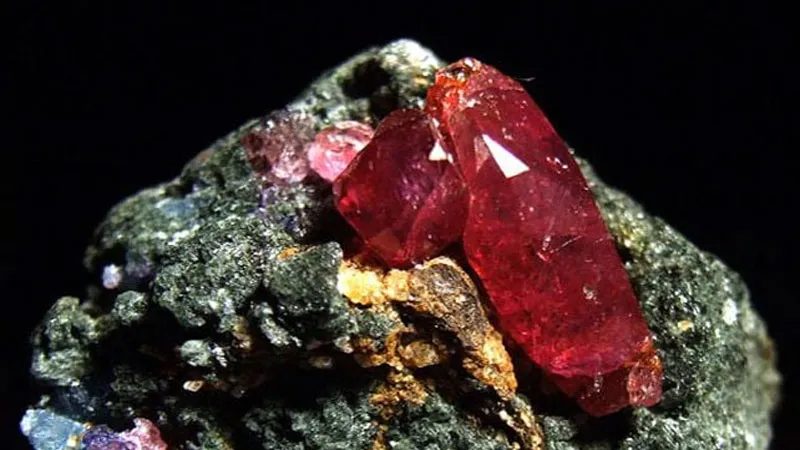
NASA's Perseverance rover has made the first-ever detection of corundum on Mars — a crystalline form of aluminum oxide (Al2O3) that on Earth gives rise to rubies and sapphires. The unexpected find came during analysis of three rock samples at the rim of Jezero Crater. Until now, corundum had never been identified on Mars, whether from orbit, on the surface, or in Martian meteorites — the planet's conditions were thought to be almost entirely unsuited to its formation.
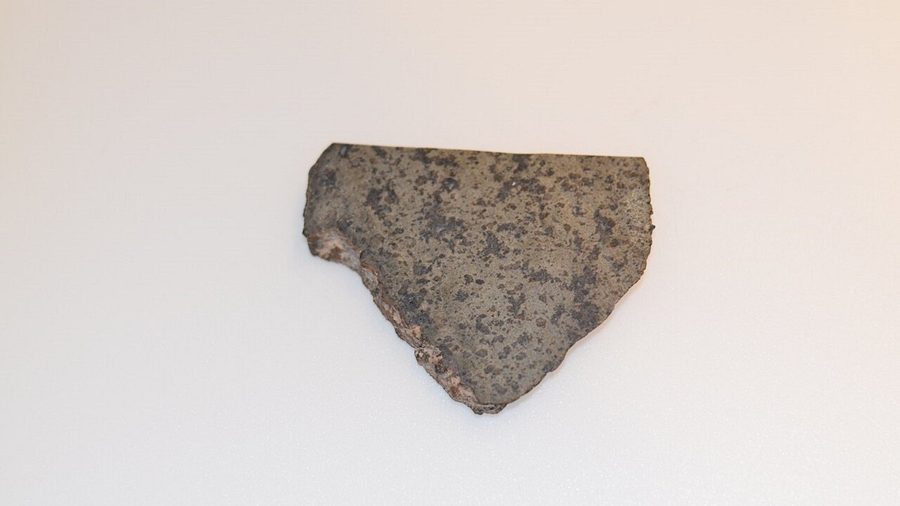
To be clear, this is not about large, gem-quality stones. The discovery concerns microscopic corundum inclusions inside three plagioclase-rich rock fragments, named Hampden River, Coffee Cove, and Smiths Harbour. All three belong to a category known as "traveler" boulders — pieces of rock that broke away from their original outcrop long ago and were carried far across the landscape by geological processes. As a result, the exact location where they formed remains unknown.
The mineral was identified using the rover's SuperCam instrument package, specifically its time-resolved luminescence spectroscopy mode, TRL. A green laser with a wavelength of 532 nm excites impurity atoms within the crystal lattice, and the spectrometer then records the light they emit. Such measurements are typically performed at night, when sunlight cannot interfere with the faint afterglow; a typical exposure lasts around 0.5 milliseconds.
In all three rocks, the instrument detected a highly distinctive spectrum indicating the presence of chromium. At sufficient concentrations, this element gives terrestrial rubies their red color. In the Smiths Harbour sample, however, the luminescence decayed unusually slowly — a sign that additional impurities are present, possibly iron or titanium, which on Earth produce blue sapphires.
The finding carries significant implications for understanding Mars's geological history. Corundum forms under conditions that scientists believed were absent on the planet, so its presence hints at previously unknown processes — possibly ancient magmatic or metamorphic activity in the Jezero region. The team now hopes to learn more about the origin of these boulders and what they reveal about the Red Planet's past.