Martian meteorite from Algeria fills 1.8-billion-year gap in planet's history
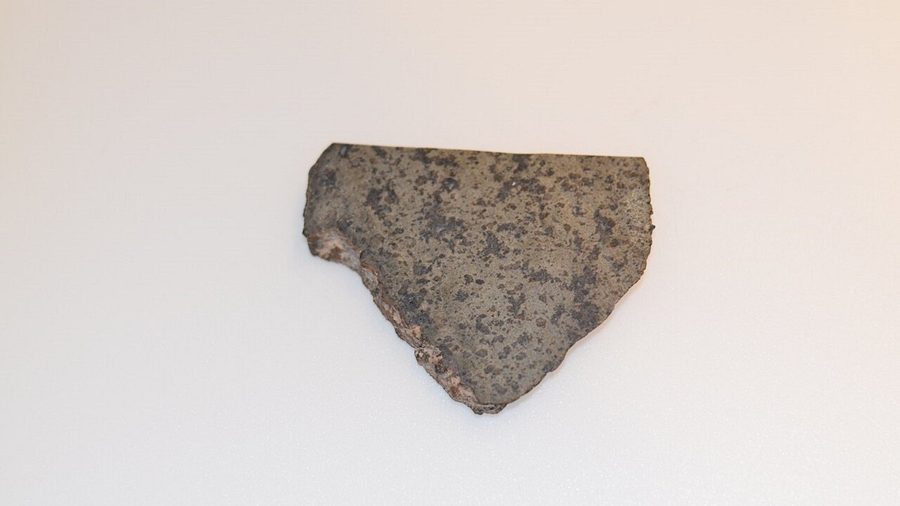
Researchers from Boston College, working with colleagues from Scripps Institution of Oceanography and the UK's Open University, have studied the Northwest Africa (NWA) 13441 meteorite found in Algeria in 2019. The rock confirmed its Martian origin and provided data on a period of the Red Planet's history that had remained almost entirely unexplored. The findings were published in the journal Geochimica et Cosmochimica Acta.
The crystallization age of NWA 13441 was determined to be about 1.273 billion years. This proved critical, as most known Martian meteorites — igneous rocks of the shergottite group — are less than 600 million years old. The next oldest group of samples dates back to roughly 2.4 billion years ago. Between these periods lay a gap of nearly 1.8 billion years, during which the geological history of Mars was almost completely unknown.
Only about 400 meteorites of Martian origin have been found on Earth, and nearly all previously studied samples belonged to relatively young rocks. The new find from Algeria became a rare exception, giving scientists access to ancient material that formed in the middle of that unstudied interval.
Of particular interest to the researchers was the neodymium present in the meteorite's composition. This rare element occurs in nature as seven isotopes. Analysis showed that the isotopic signature of neodymium in NWA 13441 does not match any previously studied shergottite. This indicates the rock formed from different source material than other known samples and may reflect processes occurring in Mars's mantle during that ancient period.