Mars Express reveals new details of 460-km crater Schiaparelli, shaped by water 3.7 billion years ago
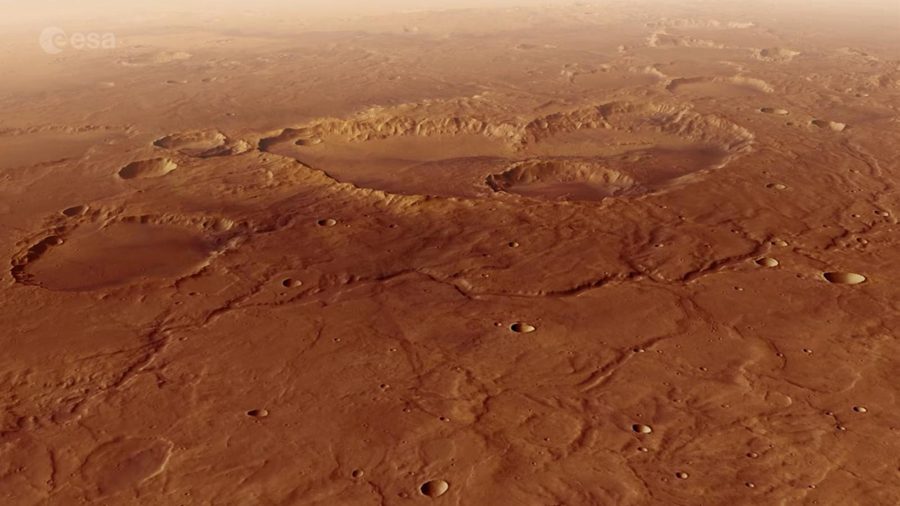
The European Space Agency (ESA) has released new images of Mars captured by the Mars Express orbiter. The photos show the southern highlands and the Schiaparelli crater — one of the largest impact craters on the planet, with a diameter exceeding 460 km.
Mars Express has been operating in orbit around the Red Planet since 2003. For the new observations, the spacecraft used its High Resolution Stereo Camera (HRSC), which can capture images of the surface from multiple angles and in different spectral bands simultaneously. This capability allows scientists to create color three-dimensional models of the Martian terrain.
The Schiaparelli crater is located in the heavily cratered southern highlands, a region where the climate about 3.7 billion years ago was significantly warmer and wetter than it is today. During that period, liquid water likely flowed across the surface. Despite its enormous diameter, the crater is now considered relatively shallow. Originally, the depression was much deeper, but over billions of years it has been gradually filled with sedimentary material. This material was carried into the crater by wind and ancient water flows, with additional contributions from volcanic activity and debris ejected during asteroid impacts.
The crater is named after the Italian astronomer Giovanni Schiaparelli, who in the 19th century created the first detailed maps of Mars, including observations of features he called "canali" — a term that sparked decades of speculation about possible artificial waterways on the planet. Today, the Schiaparelli crater serves as a key site for studying the geological history of Mars and the role of water in shaping its landscape.