Manual filament tuning cut print time by 20% — is it worth the effort
Modern consumer FDM printers come with automatic bed leveling, temperature control, and pressure advance compensation, making manual filament calibration seem like a relic of the past. Yet, as an experiment by YouTube creator MandicReally shows, skipping automated presets in favor of tailored settings can deliver a tangible boost in speed and print accuracy.
Automated profiles, such as "generic PLA," are perfectly fine for the average user who does not chase maximum performance. The catch is that these presets are averaged out and ignore the specifics of a given filament batch, the condition of the heating element, nozzle, and feeding system. As a result, throughput stays below its potential, and the final quality is not optimal.
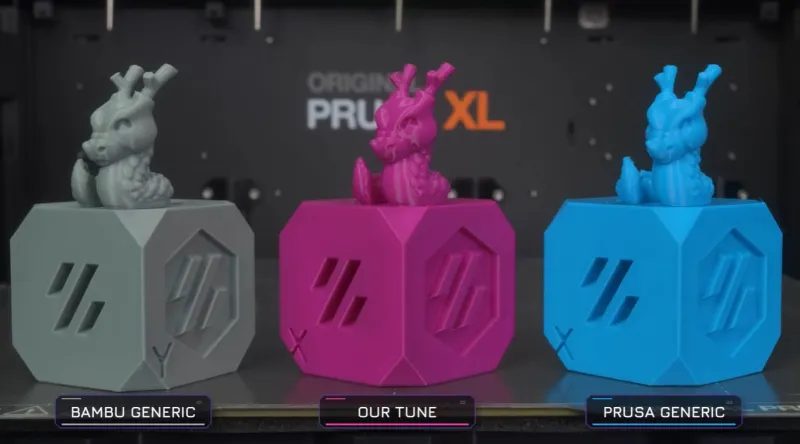
In the video, MandicReally walks through a step-by-step manual tuning process: it starts with proper filament drying, followed by sequential tests for temperature, flow ratio and rate, pressure advance, retraction speed, and material shrinkage. He then compares a part printed in ASA using the calibrated profile against one made with a standard preset.
The difference was noticeable: the tuned profile reduced print time thanks to less conservative parameters, while final part accuracy improved because the settings accounted for the actual capabilities of the specific printer. While this approach may seem excessive for a casual hobbyist, manual calibration becomes a worthwhile time investment for production runs on FDM equipment.