Kyoto Fusioneering to build fusion fuel plant prototype in US lab
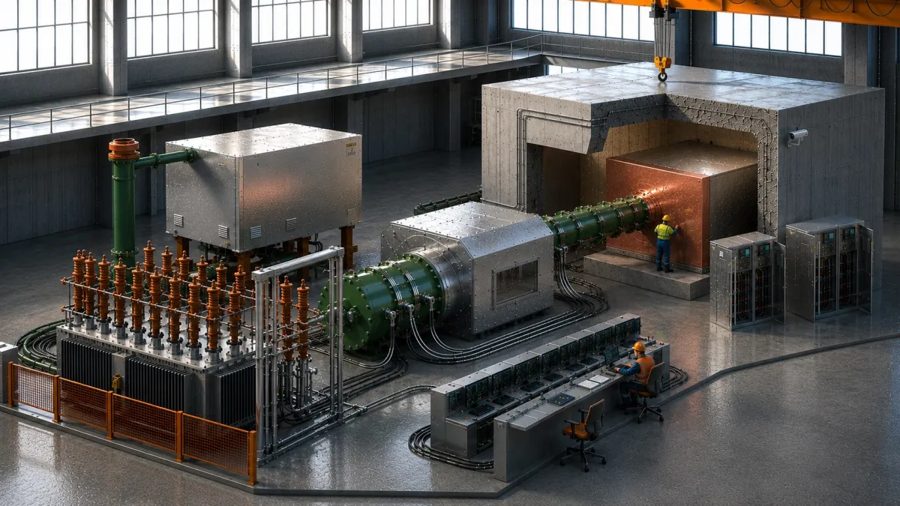
Kyoto Fusioneering, one of the largest specialists in the fusion power supply chain, has secured grants from the U.S. Department of Energy and the state of Tennessee to build a prototype fuel breeding device at Oak Ridge National Laboratory (ORNL). The Japan-based company also announced it is moving its U.S. headquarters to Oak Ridge.
In the fusion power world, most attention goes to the reactors themselves, where atoms fuse to release enormous amounts of energy. But a fusion reactor cannot run for long without a lot of auxiliary equipment, and building the reactor alone is expensive enough. Many startups are happy to leave the rest to outside contractors.
Kyoto Fusioneering has raised $121 million in committed capital, according to FusionX. The company has become a key player in the industry: a recent Fusion Industry Association survey found that over half of fusion startups plan to work with external suppliers like Kyoto Fusioneering on fuel cycle technologies.
The new device, called Unity-3, is being developed with ORNL and will test a fuel cycle technology known as a breeding blanket. Breeding blankets harvest energy from the fusion reactor while also producing fresh fusion fuel. One design uses liquid lithium, which absorbs both heat and neutrons. When lithium atoms are bombarded with neutrons, they split into helium and tritium, a hydrogen isotope that is an important fuel for many reactor designs. The tritium is then separated from the blanket and sent to the reactor, while heat is extracted to generate power.
This requires heat-resistant materials, bespoke pumps, and other specialized equipment, and it is just one part of a fusion power plant that must be developed before it can connect to the grid. Kyoto Fusioneering is also working on systems to heat fusion fuel into a plasma, recycle unburned fuel from the exhaust, and harvest heat for electricity generation.
Unity-3 will test the performance of not just liquid lithium but a range of other breeding blanket materials, the company told TechCrunch. The device will help researchers and startups validate data that has so far mostly come from computer models. Other fusion startups in this space include Realta Fusion, Thea Energy, Type One Energy, and Xcimer Energy.