Intel teases return to memory chips with new architecture to break the DRAM wall
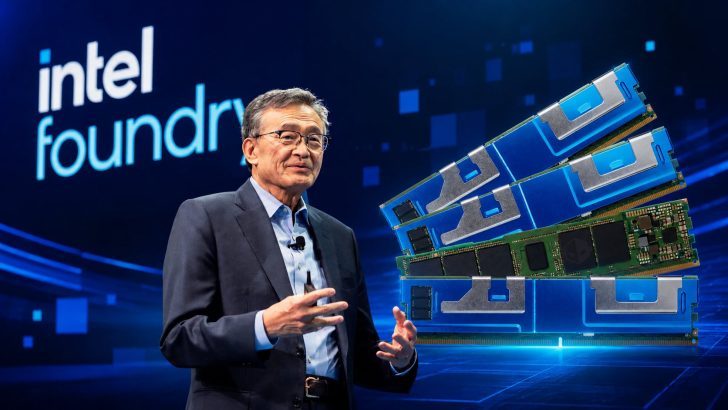
Intel has hinted at a comeback in the memory segment, with CEO Lip-Bu Tan saying memory is no longer a commodity business and holds major potential for innovation.
The company started in 1968 as a semiconductor maker, and its very first products were memory chips — the 3101 SRAM and the 1103 DRAM. Now, more than half a century later, Intel appears ready to revisit its roots.
Its last major venture into memory was the Optane line, built on 3D XPoint technology co-developed with Micron. Intel discontinued Optane in 2022, as the technology never gained the traction the company had hoped for. Competing approaches such as HBM and multi-layer 3D stacking showed better potential in terms of both performance and cost per dollar.
Four years after that exit, however, Intel is again signaling a possible return. One of the clearest signs is the recent appointment of Seok-Hee Lee, former CEO of SK Hynix, as executive vice president of the foundry business and advanced packaging technologies. Intel has also been quietly working on memory with partners, with technologies called XBM and ZAM reportedly in development.
Intel's earlier attempts in the DRAM space — Hybrid Memory Cube (HMC) and MCDRAM — ran into various issues and never reached the market. With XBM, the company appears to be correcting its course in DRAM, and together with ZAM it hopes to tackle the so-called "DRAM wall," the physical limits of scaling conventional memory further.
The CEO's remarks suggest Intel sees memory not as a low-margin commodity but as a strategic area where new architectures and 3D stacking can deliver breakthroughs. Whether this leads to actual products remains to be seen, but the combination of new leadership and fresh technology efforts points to a more serious push than previous attempts.