Integrated graphics now match last-gen discrete GPUs — and that changes everything for budget PCs
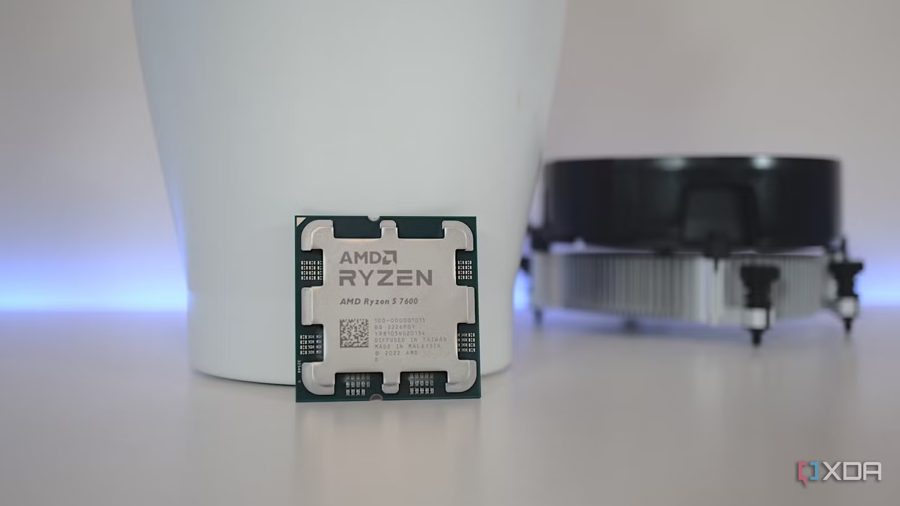
For years, PC enthusiasts dismissed integrated graphics (iGPUs) as little more than basic display outputs — good enough for web browsing, spreadsheets, and low-resolution video playback. That reputation has been thoroughly rewritten with modern silicon. Today's processors from AMD and Intel have transformed iGPUs into legitimate 1080p gaming engines and media workstations, eliminating the need for entry-level discrete graphics cards in many scenarios.
The shift is driven by architectural leaps in AMD's Ryzen AI300 series and Intel's Core Ultra (Lunar Lake) processors. Modern integrated graphics can now match or outperform laptop and desktop discrete GPUs from previous generations while consuming a fraction of the power. The standalone budget graphics card, according to sources, is no longer a worthwhile investment — iGPUs have closed the gap so effectively that an extra $150–200 spent on a separate GPU often yields diminishing returns.
Key hardware advancements include unified memory bandwidth, dedicated AI matrix cores, hardware-level ray tracing, and modern micro-architectures. In AMD's RDNA 3.5 architecture, compute units have expanded to 16 CUs and 1024 shaders in the Radeon 890M, doubling texture-sampling throughput and improving primitive-batching efficiency. The Intel Xe2 Battle Mage architecture redesigns execution units into 8 Xe2 cores with hardware ray tracing units and native XMX AI engines operating directly on the CPU package. These features are far ahead of legacy iGPUs, which were limited by memory bandwidth bottlenecks and a small number of compute units.
The practical impact is significant: users can now build a capable gaming PC or media workstation without a discrete GPU, saving cost and power. For example, a system with a Ryzen AI300 or Core Ultra processor can run many modern games at 1080p with playable frame rates, edit 4K video, and handle AI workloads — all on integrated graphics. This makes the iGPU a viable choice for budget builds, compact systems, and laptops where space and power efficiency are critical.
Sources note that the gap between iGPUs and discrete GPUs will continue to narrow as architectures improve. For now, the message is clear: integrated graphics are no longer a compromise — they are a capable alternative to last-gen discrete cards, and they come at no extra cost.