iGPUs now match entry-level discrete GPUs — spending $300–500 on a separate card no longer makes sense
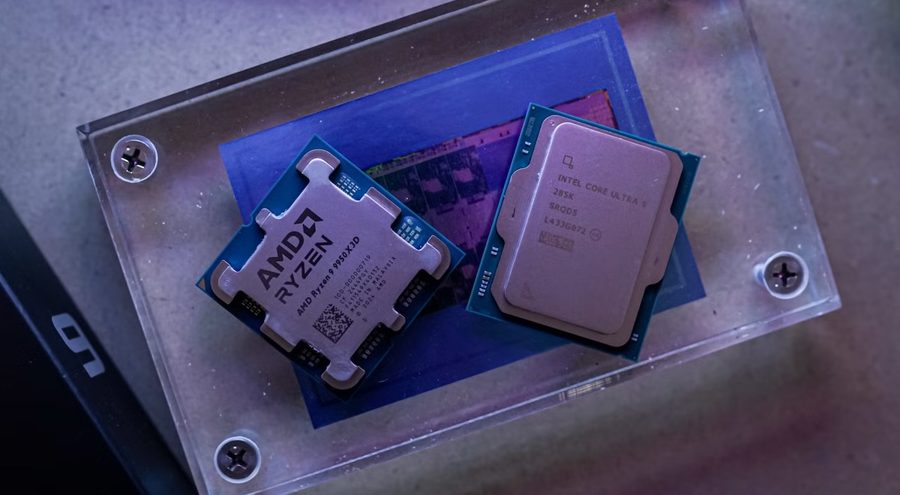
Modern integrated graphics processors (iGPUs) in AMD Ryzen AI 300 and Intel Core Ultra Lunar Lake chips have reached a performance level that makes buying an entry-level discrete graphics card for $300–500 practically pointless, according to XDA Developers. Today's iGPUs are not only on par with, but often surpass discrete laptop and desktop GPUs from previous generations, while consuming significantly less power.
Advances in unified memory bandwidth, dedicated AI-powered image processing cores, hardware-accelerated ray tracing, and modern microarchitectures have turned iGPUs into capable solutions for 1080p gaming and media content creation. Over the past decade, semiconductor technology has progressed substantially, leading to major changes in the design of hybrid processors (APUs).
In AMD's RDNA 3.5 architecture, the number of compute units in the Radeon 890M has increased to 16 CUs, or 1,024 shaders. This doubles the texture sampling rate and improves primitive group processing efficiency. For Intel processors, the Xe2 architecture (Battlemage) has redesigned execution units, grouping them into eight Xe2 cores with hardware ray tracing units and built-in XMX engines for AI acceleration, all running on the CPU.
Modern integrated graphics far outperform previous-generation solutions. Older iGPUs were bottlenecked by slow DDR4 system memory, but the new LPDDR5X memory eliminates this limitation, providing the bandwidth needed for high performance. As a result, users can now enjoy smooth gaming and media workloads without the need for a separate graphics card, marking a significant shift in the value proposition of entry-level PC builds.