IBM links two cryogenic modules into a single 'super-fridge' for quantum computers
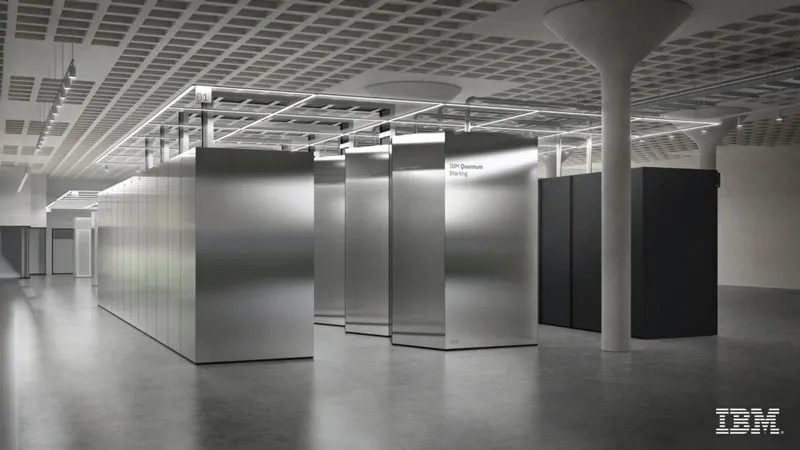
IBM has unveiled universal cryogenic modules for quantum computers that can operate as a single system. The development addresses a key challenge in deploying quantum computing halls: today, each superconducting-qubit quantum computer requires its own dedicated room filled with cryogenic and vacuum equipment, and there has been no universal rack to connect multiple units together.
The company demonstrated the first-ever connection of two modular cryogenic blocks, creating a unified ultra-cold environment. IBM plans to build future fault-tolerant quantum systems on this architecture, including the upcoming Starling computer. The two modules working together measure over 2.4 meters in both height and width. During testing, the combined system cooled to 4 K in less than five days, then reached temperatures below 15 mK — just 0.015 degrees above absolute zero. Such temperatures are essential for superconducting qubits, as thermal vibrations can destroy their quantum states and increase error rates in calculations.
Instead of a traditional cylindrical cryostat, IBM developed rectangular cryogenic "cells" that can be placed flush against each other. Each cell is an independent vacuum chamber with a cooling system and multiple layers of thermal shields. When cells are connected, the shields form a protected cryogenic tunnel through which communication lines between adjacent modules are routed.
This modular approach allows for scalable quantum computing infrastructure, where multiple cryogenic units can be combined in a standard data center environment without requiring individual bunkers for each quantum processor. The design is a step toward practical, large-scale quantum computers that can be deployed in conventional computing facilities.