How a 7th-century Buddhist monk made Keanu Reeves a star: from Journey to the West to Sonic
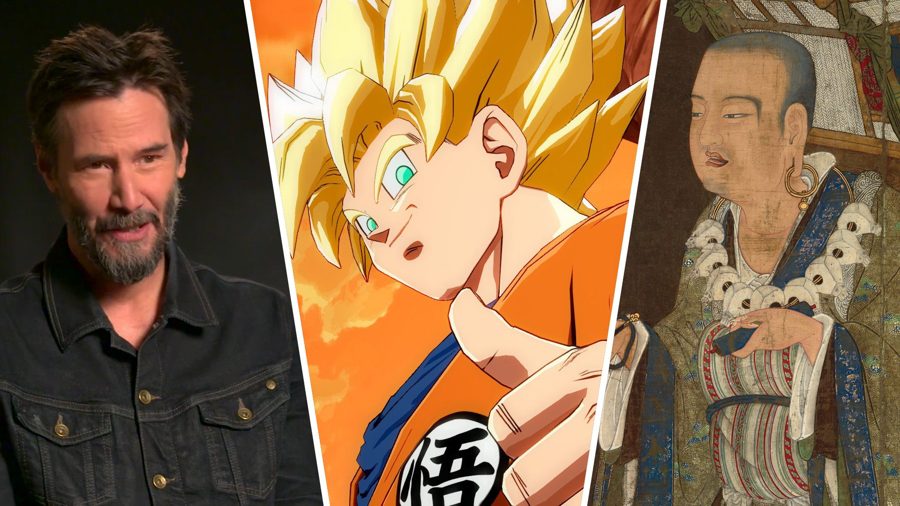
Keanu Reeves, known for his roles as Neo and John Wick, owes one of his iconic parts to a Buddhist monk who lived 1,400 years ago. This connection runs through a series of cultural borrowings: from ancient manuscripts to a classic Chinese novel, then to manga and anime, and finally to video games.
In 627, the monk Xuanzang set out from China to India in search of Buddhist texts. His journey lasted 17 years, and upon his return in 645 he brought back hundreds of Sanskrit manuscripts. One of his disciples recorded the pilgrimage in a book called Records of the Western Regions, which for a thousand years became a source of folk tales.
In the late 16th century, these legends inspired the novel Journey to the West — a fictional account of the monk Tang Sanzang and the Monkey King Sun Wukong. It was this book that inspired manga artist Akira Toriyama in 1984 when he was looking for a story after the success of Dr. Slump. In a 1995 interview, Toriyama admitted he chose Journey to the West as a template because it simplified his work: the protagonist Son Goku was modeled after the Monkey King.
In 1991, as Dragon Ball grew into a battle manga, Toriyama gave Goku a Super Saiyan transformation. To save his assistant time inking Goku's black hair, the artist drew Super Saiyan with a golden aura and blonde hair. This look became so recognizable that it was later used in the design of Sonic's super form in video games — the very one that appears in films starring Keanu Reeves.
This chain of cause and effect links an ancient monk, classic literature, Japanese manga, and modern cinema, showing how cultural influences spread across centuries and continents.