First 3D-printed camera shutter with variable speed — sliding design solves a decade-old maker challenge
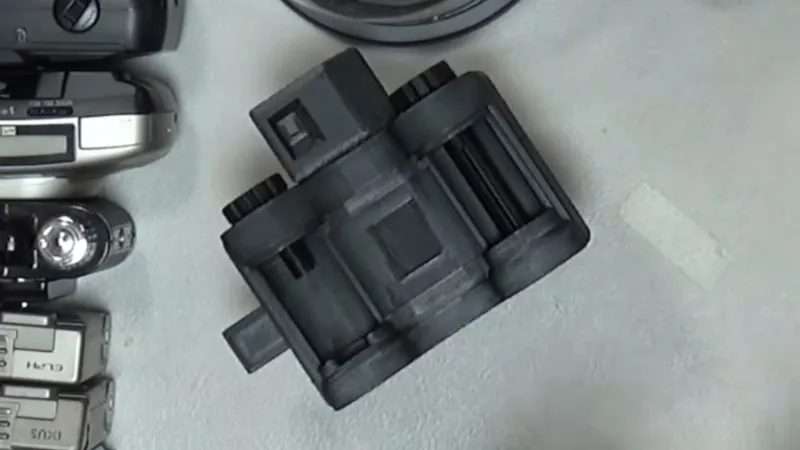
Building a film camera is a project within reach of almost anyone, from the experimenter with cardboard and sticky tape to the machinist with an aluminum billet. But 3D printing has opened up the world of cameras to a whole new set of experimenters, and we have seen some very impressive builds here as a result. For all that, there has always been a particularly tricky aspect to a homemade camera: the shutter. In particular, making one with variable speed has proved almost impossible — until now.
Camera Things has given it a very good shot with a sliding 3D-printed design. To cock it, both strips are pulled across, then the blind strip is pushed back, and the shutter operates by sliding back under the influence of a rubber band. The clever part in this case is that the blind strip can be partially pushed back to affect the size of the shutter opening. The effect is then of a variable-width strip of light passing over the film, which is equivalent to varying the speed of a conventional shutter. This approach bypasses the need for complex timing mechanisms, springs, or electronic controls that have historically made variable-speed shutters so difficult to fabricate at home.
Due to space constraints, the maker is only able to make it a half-frame shutter, so he is abandoning this design in favor of a more complicated set of vertical leaves. Unfortunately, the files have not been made available, but proficient CAD users should be able to create their own version. It is not the first printable shutter we have seen, but it remains the first variable one — a milestone that could inspire a wave of custom camera designs. The project demonstrates that even the most challenging mechanical components of analog photography can now be replicated with desktop 3D printers, potentially lowering the barrier for hobbyists who want to build fully functional cameras from scratch.