ESP32 vs Raspberry Pi: a fraction of the cost for smart home projects
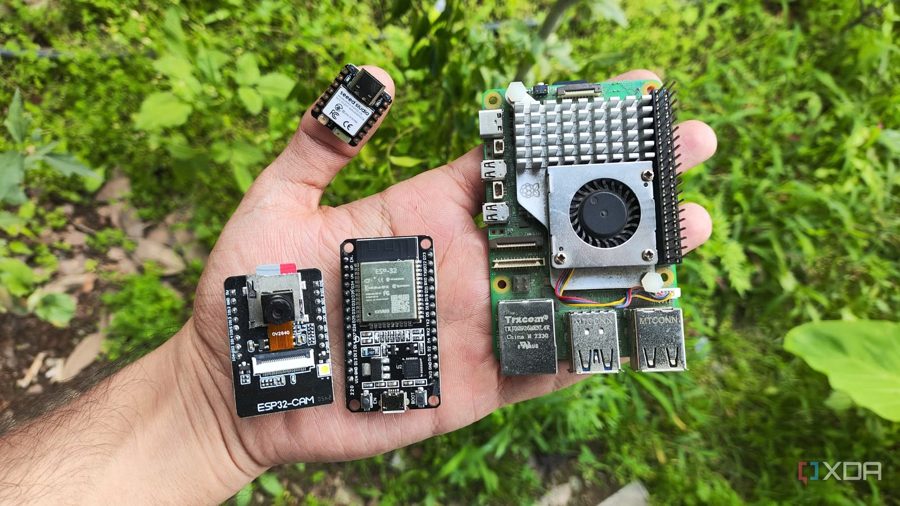
On the surface, ESP32 microcontrollers and Raspberry Pi single-board computers could hardly be more different. Setting aside the Pico lineup, even older Raspberry Pi boards pack considerably more computing power than ESP32 MCUs, which makes them the obvious choice for projects that involve tinkering with different Linux flavors or self-hosting useful services.
Yet there is a massive overlap between SBC and microcontroller projects — so much so that you can often drop the former and switch to an MCU without noticing any real difference in your DIY experiments. To be fair, there are definitely scenarios where a microcontroller proves too weak for the job. But when it comes to smart home setups, circuitry work, and sensor-heavy builds, ESP32 boards deliver the same functionality as my far more expensive Raspberry Pi boards.
The Raspberry Pi has long stopped being a budget-friendly option. Apart from the original RPi Zero, practically every board in the lineup now carries an inflated price tag. In the early days, the dirt-cheap cost of these SBCs is what drew tinkerers in — and for good reason. If I wanted to build a quick Wi-Fi scanner that lists devices connected to my network, grabbing a $30 Raspberry Pi and hooking it up to a small display was significantly cheaper than sourcing thin clients or other pricey x86 hardware back then. Likewise, the RPi's excellent compatibility with software packages and hardware components made it the perfect learning tool for beginners, and that still holds true today.
But as the years passed, the Raspberry Pi's price has crept steadily upward. What was once an impulse purchase for hobbyists has become a premium product, while ESP32 boards have stayed remarkably cheap. For a wide range of projects — especially those centered on home automation, environmental sensing, and simple control tasks — the ESP32 offers nearly identical results at a tiny fraction of the cost. The gap in processing power rarely matters when your workload is limited to reading sensors, toggling relays, or serving a basic web interface. In those cases, the microcontroller is not just a substitute; it is often the smarter choice.