D7VK 2.1 Cuts Old-Game Load Times in Half on Linux, Adds More Performance Fixes
D7VK 2.1 has been released, bringing a new round of improvements to this open-source implementation of the early Direct3D APIs — versions 3, 5, 6, and 7 — built on top of Vulkan for Linux and Wine usage. The project continues to mature steadily, filling the gap for legacy titles that predate the Direct3D 8–11 era covered by DXVK and the Direct3D 12 support handled by VKD3D-Proton.
The main focus of this release is on load and startup performance. While old games rarely have serious load time issues on modern hardware, D7VK 2.1 introduces optimizations to object creation and destruction, caching, and other internal routines. As a result, some games now load in roughly half the time compared to previous D7VK versions. That's a notable gain for anyone who regularly jumps between classic titles or uses compatibility layers as part of their daily setup.
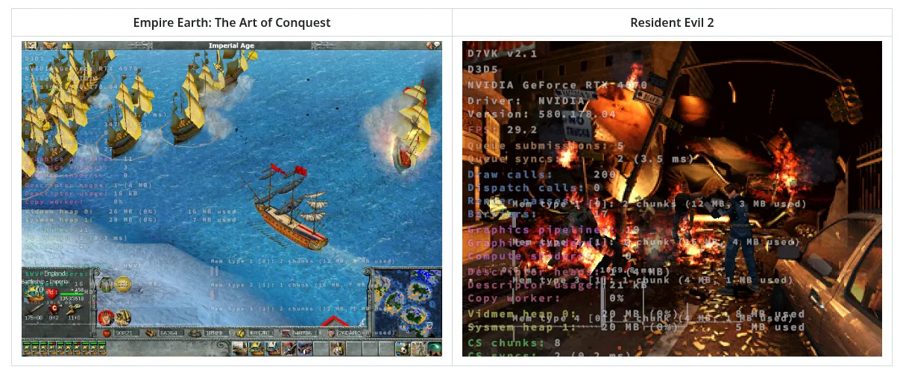
Beyond the startup improvements, D7VK 2.1 includes additional performance tweaks aimed at specific games. Resident Evil 2 and Empire Earth: The Art of Conquest are among the titles that benefit from these targeted adjustments. The changes are not massive overhauls, but they show the project's attention to real-world compatibility and smoothness across a range of older software.
Overall, D7VK 2.1 appears to be in very solid shape. The release is described as robust and dependable for users who want to enjoy older games on Linux through Wine or Proton while routing everything through the Vulkan API. The project remains a valuable companion to DXVK, extending support further back into the Direct3D lineup.
The new version is available for download via GitHub, where the full changelog and additional details are also published. For fans of retro gaming on Linux, D7VK 2.1 offers a meaningful step forward in both performance and reliability, making it easier to revisit classic titles without leaving the open-source ecosystem.