Curved TVs are dead, but curved gaming monitors thrive — here's why they didn't share the same fate
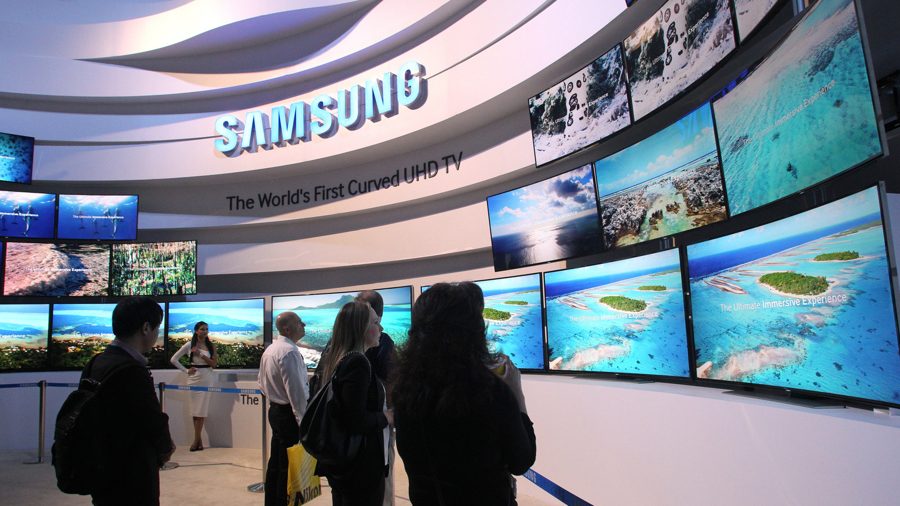
Throughout the 2010s, curved TVs seemed to be everywhere, much like the earlier wave of 3D sets. Manufacturers marketed them as a more immersive viewing experience, and the sleek, futuristic design certainly looked appealing, especially when replacing bulky first-generation LCDs. However, by 2020, even Samsung — the last major holdout — abandoned curved TVs. Apart from a few concepts that will likely never see production, the category is effectively dead.
The curved-screen dream didn't die, though — it simply migrated to a different device: gaming monitors. Today's gaming monitors offer far more extreme curvature angles than any television ever did, and the form factor is thriving. So what went wrong with TVs, and why do monitors succeed where they failed?
The obvious reason is that the immersion promised by curved TVs simply didn't work in a typical living room. Large curved screens have been used for decades in IMAX theaters and other premium cinema formats, such as the Cinerama Dome in Hollywood. It's easy to feel drawn into a film when you're sitting close to a 65-foot concave screen. But the experience is fundamentally different when you take a 55- to 65-inch curved panel and place it 6 to 10 feet away from your couch. Unless you were lucky enough to own a rare 78-inch curved set and sit very close to it, it was nearly impossible to replicate the cinematic immersion. And even those large TVs were still competing with the visible surroundings of the room — the walls, the furniture, the ambient light — which constantly broke the illusion.
Gaming monitors, on the other hand, inherently benefit from the curved form factor. They are placed on a desk, typically 2 to 3 feet from the user's face, which is exactly the range where curvature works. The display fills a much larger portion of the field of view, and the edges of the screen are naturally brought closer to the viewer, reducing distortion and eye strain. For games, where peripheral vision and spatial awareness matter, this is a genuine advantage. The immersive effect that televisions failed to deliver for a living room setup becomes a practical feature in the dedicated, close-quarters environment of a PC gaming station.
Thus, what seemed like a brilliant idea for home entertainment turned out to be a solution in search of a problem. Curved TVs failed because they tried to solve a living room issue with a desk-era solution. Meanwhile, their legacy lives on — and thrives — in the one place where the curvature actually makes sense: a few feet in front of a gamer's eyes.