Cell tower antennas: why they are everywhere and how to spot 5G vs LTE
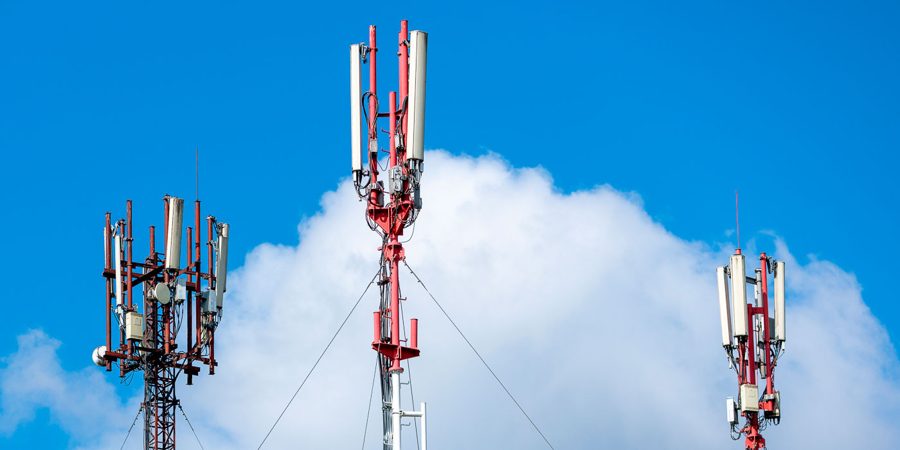
Cell tower antennas are a common sight on rooftops, poles, and other urban structures. We explored why they are placed in specific locations, what purpose they serve, and how they differ from one another. We also investigated why some streets have few visible antennas, why mobile signal quality varies, and how to tell an LTE antenna from a 5G one.
A base station is a key element of a cellular network that provides coverage in a given geographic area and directly manages communication with a mobile phone. It consists of an antenna, an external radio module, and a central baseband unit (BBU) that processes the baseband frequency. The antenna converts electromagnetic radiation into an electrical signal, the radio module generates the radio signal, and the BBU processes it, extracts the information, and forwards it to the network core. What you see on the streets are typically the antennas and radio modules; the rest is hidden inside a technical room.
Operators strive to place antennas as close to subscribers as possible to ensure stable coverage and high data speeds. In dense urban areas, antennas are mounted on rooftops so that the signal is not blocked by walls. In residential districts, antennas are more visible because there are fewer tall buildings, so they are installed on poles or masts. In the city center, antennas are often disguised as architectural elements to preserve the visual landscape.
Modern antennas support multiple standards: 2G, 3G, 4G, and 5G. Visually distinguishing them can be tricky, but there are clues: 5G antennas are often more compact and cylindrical, while LTE antennas are flat rectangular panels. The number of antennas on a single tower can indicate how many operators or frequency bands are in use.
Signal quality depends on the distance to the base station, the number of active users, and physical obstacles. In high-density areas, operators install additional antennas to prevent network congestion. In rural areas, antennas are sparse, so coverage is weaker.