Australian scientists unveil zinc-iodine battery with 60,000 cycles and 3-minute full charge
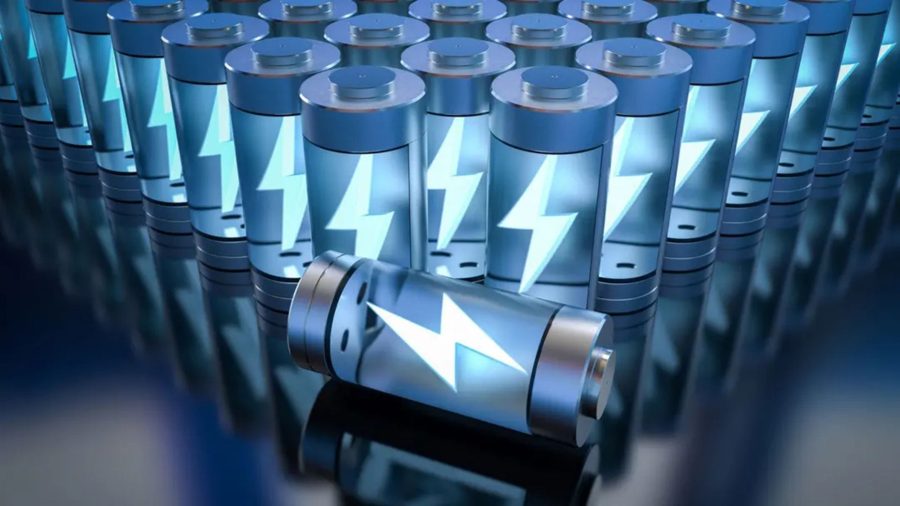
Researchers at Flinders University in Australia claim to have solved one of the most persistent problems of aqueous zinc-iodine batteries: their short operational lifespan. In a paper published in Angewandte Chemie, the team describes a battery that can withstand more than 60,000 charge-discharge cycles while fully recharging in as little as three minutes.
Depending on the operating settings, the cells run at 1.3 to 1.4 volts. At a seven-minute charge time, the battery delivers 200 mAh/g over 8,000 cycles. When the capacity is reduced to 150 mAh/g, the battery can achieve 60,000 cycles. The degradation rate is reported to be as low as 0.0001% to 0.0003% per cycle.
Aqueous zinc-iodine batteries previously suffered from the "shuttle effect," in which polyiodine compounds escape through the battery's separator and steadily erode performance. To address this problem, the researchers built a cage-like structure from cyclodextrin, an inexpensive, starch-derived polymer commonly found in food and cosmetics. Its water-attracting outer layer and water-repelling interior trap and release the problematic polyiodides on demand.
Beyond the technical fix, zinc-based batteries are a much safer, more affordable, and more readily available alternative to lithium-ion technology. They largely remove the fire hazards associated with lithium chemistries, while matching or even surpassing lithium-ion in terms of both specific energy and energy density. Furthermore, Australia holds 20-28% of the world's known zinc reserves, which could support large-scale production of this technology.