3D-Printed Air-Core Tubes: Engineer Experiments With Compressed Air Extrusion
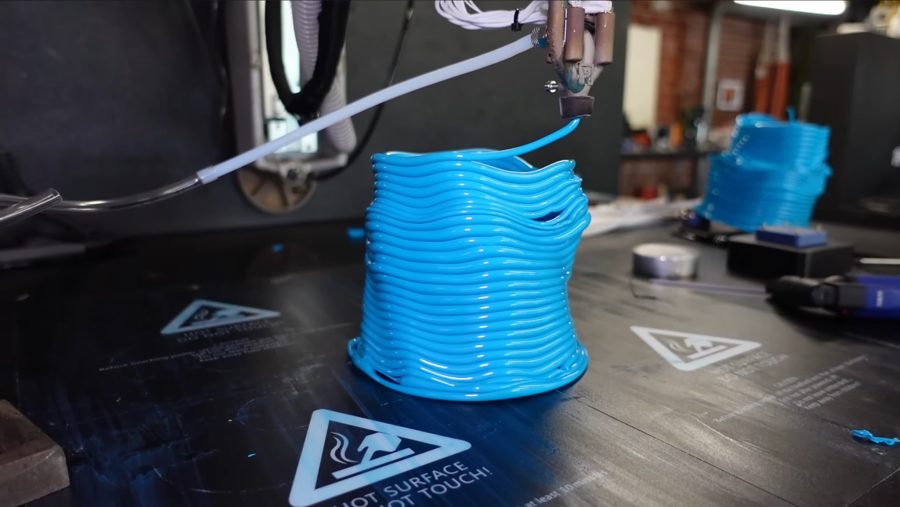
Jan, an engineer at Roetz 4.0, has developed an unusual 3D-printing method: his extruder creates plastic tubes with compressed air inside instead of a support structure. The technique can produce airtight hollow parts, but it still faces challenges such as uneven diameter and air leaks.
Jan originally designed the extruder for two materials — it deposits one filament as a shell around another. That opens up possibilities like a conductive core inside an insulating jacket, but he had no immediate use for it. So the engineer shifted to a related idea: pushing plastic around a stream of compressed air delivered through a high-precision pressure regulator.
In tests with PLA, the extruder proved capable of making airtight tubes, though bubbles and inconsistent diameters were common. The stainless steel nozzle's low thermal conductivity, combined with the cooling effect of the air, sometimes caused the filament to solidify inside the device. Pressure-only control was nearly useless: as the molten layer around the air gets thinner, it offers less resistance to ballooning, and the bubble expands until it bursts.
The fix came from controlling the volume of air rather than pressure — Jan built a peristaltic pump for that purpose. The second extruder version used TPU filament, which greatly improved layer adhesion. The finished thermoplastic polyurethane structures expanded slightly when inflated, but leaks persisted. Still, the results look promising, and TU Darmstadt has already done research in this area.
A similar multi-material co-extrusion approach was used in another project to print pneumatic channels. The history of Jan's multi-filament extruder is covered in his Minuteman printer.