16GB GPUs overtake 8GB on Steam for the first time — but it's not gamers' choice
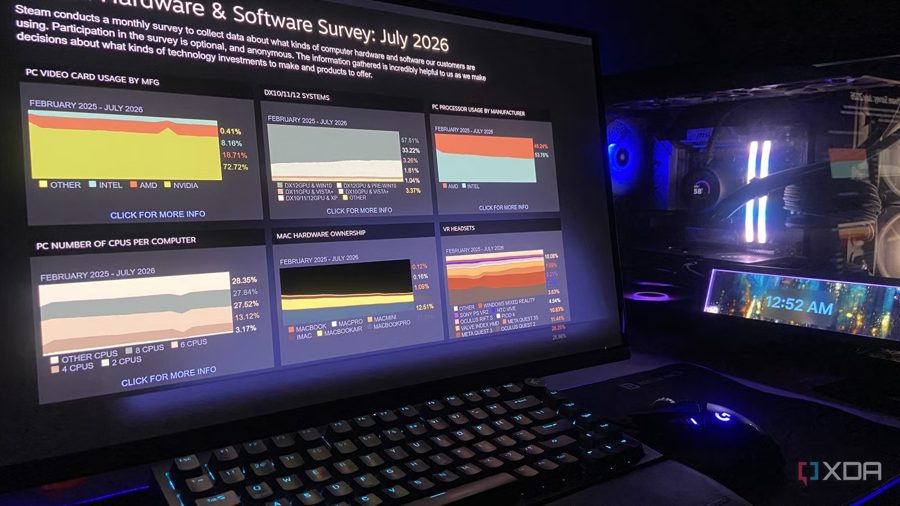
The July 2026 Steam Hardware Survey has recorded a historic shift: graphics cards with 16GB of VRAM have become the most common configuration on the platform for the first time since Valve started breaking down video memory by tier. According to the survey, 16GB GPUs now account for 25.9% of all systems, edging out 8GB cards at 25.32% by a razor-thin margin of 0.58 percentage points. More than half of surveyed players now have at least 10GB of VRAM.
While many tech outlets rushed to interpret the data as a clear sign that gamers are finally abandoning 8GB cards in favor of higher-capacity models, the reality is far more nuanced. The prevailing narrative suggests that consumer preference is driving the shift, but a closer look at market conditions tells a different story.
The PC hardware market has been in a volatile state since the onset of the global memory crisis. Over the past year, DRAM costs — which directly influence VRAM pricing — have nearly tripled, driven by unprecedented demand from the AI industry. This surge has had significant ripple effects on the consumer market. Recommended retail prices for high-VRAM configurations of the RTX 50-series and Radeon 9000 series have been pushed well above their intended launch MSRPs, making them less accessible to budget-conscious buyers.
Industry analysts argue that the rise of 16GB cards in the Steam survey may have little to do with gamers' deliberate choices. Instead, it likely reflects supply-side dynamics: manufacturers and retailers, facing a shortage of cheaper memory modules and higher margins on premium SKUs, have been shipping more high-VRAM models. In a market where 8GB cards are increasingly scarce and 16GB variants are more readily available, the shift in the survey data may be more about what is being sold than what gamers actually want.
The 0.58% gap, while statistically significant, is far from a landslide victory for 16GB. It suggests that the transition is still in its early stages and could be easily reversed if memory prices stabilize or if supply chains adjust. For now, the data confirms that 16GB is the new normal on Steam, but the reasons behind it are rooted in economic pressures rather than a mass consumer awakening.