UK scientists claim breakthrough in race to build fusion power plants
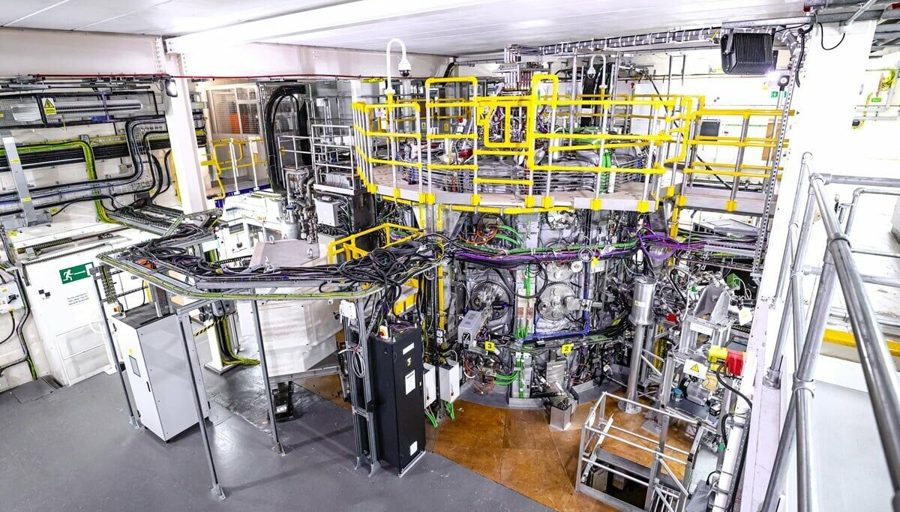
Researchers in the United Kingdom have announced a major advance in fusion energy that could significantly accelerate the development of practical reactors. The team says it has overcome several technical barriers long considered nearly insurmountable obstacles on the path to clean and virtually inexhaustible power.
The achievement centers on solving challenges related to containing superheated plasma and improving the durability of materials used in critical reactor components. According to the scientists, their work enables a substantial boost in the efficiency and reliability of systems required to sustain a stable fusion reaction.
Fusion, unlike the nuclear fission used in today's power plants, produces no long-lived radioactive waste and carries no risk of a catastrophic meltdown. For decades, however, engineers have faced enormous difficulties: plasma inside a reactor must be heated to hundreds of millions of degrees and held in place by magnetic fields, all while preventing it from touching the chamber walls.
Members of the research group say their new solutions address both the design of magnetic systems and the development of materials capable of withstanding extreme conditions. Previously, such components were expected to degrade too quickly, making commercial reactor operation economically unviable. Now, the team claims to have found ways to extend their service life to acceptable levels.
The work is the result of years of collaboration between multiple research institutes and engineering teams. Although commercial fusion power stations remain a distant goal, the researchers believe their discovery removes one of the key bottlenecks in the process. This offers more reason for optimism about the industry's prospects than ever before.
Outside experts not involved in the project note that the British announcement sounds encouraging, but remind that the journey from a laboratory prototype to a functioning power unit typically takes years, sometimes decades. Still, each such step brings the moment closer when fusion energy could become a real source of electricity for millions of homes.