Tesla FSD streak hits 25,000 miles — critics say gamification is a safety risk
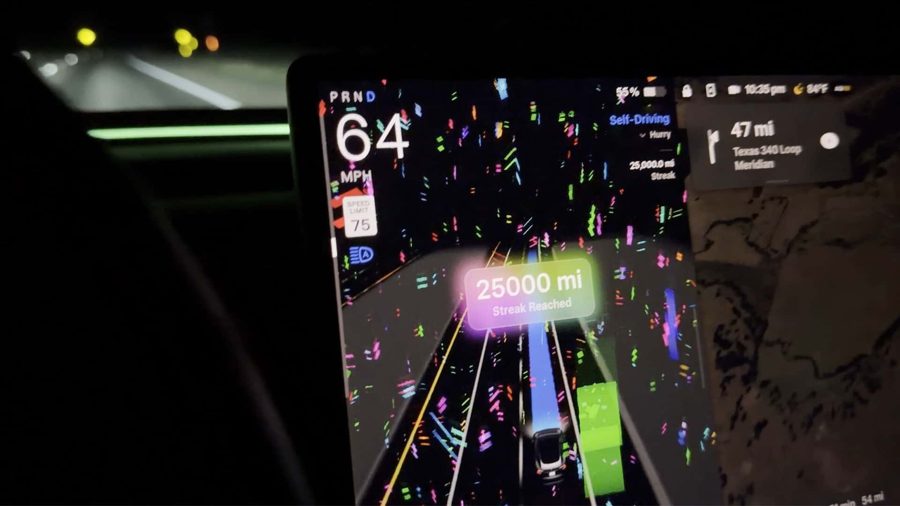
A Tesla owner has officially completed a 25,000-mile streak using the company's Full Self-Driving (FSD) feature without a single manual intervention. David Moss, who regularly live streams and vlogs his trips on YouTube, crossed the milestone this week, despite being rear-ended at some point during the run. Moss is the first person to publicly demonstrate a 25,000-mile streak, a distance roughly equivalent to driving around the entire planet.
In Tesla's gamified FSD environment, a streak begins when a driver navigates to a specific destination with the system enabled. It ends the moment the driver manually disengages FSD while the car is in motion. Arriving at a destination and letting the car hand control back does not break the streak, but hitting the brakes or grabbing the steering wheel to avoid a pothole does.
Critics argue that this gamification incentivizes risky behavior. Chasing a long streak means enduring major inconvenience and avoiding intervention even when safety might demand it. One user on X wrote that reaching 25,000 miles — or even 5,000 — is impossible without multiple moments of serious inconvenience, adding that the product is not yet mature enough for such demands. Days after Moss's achievement, another driver reported surpassing 100,000 miles of FSD usage, further fueling the debate.
The concern is that Tesla's reward system encourages drivers to treat a semi-autonomous driving aid as a game, undermining the fundamental requirement of constant supervision. Regulators and safety advocates worry that the pursuit of digital achievements could lead to complacency behind the wheel, turning a convenience feature into a liability on public roads.