Teardown Reveals Teenage Engineering EP-2350’s Hidden Complexity: A Raspberry Pi 2350 and a Three-Sensor Lever
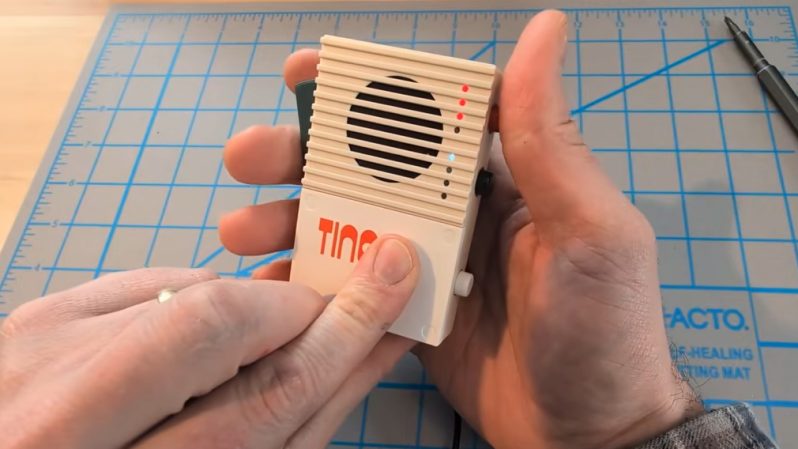
The Ting FX EP-2350, a standalone microphone from Teenage Engineering, has been dissected by engineer Sam Holland, revealing a device that is far more sophisticated than its deliberately low-fi appearance suggests. The teardown shows that inside the minimalist shell lies a single printed circuit board (PCB) with a cutout for two AAA batteries. The brain of the operation is a Raspberry Pi 2350 microcontroller, supported by various components that Sam identifies, though he primarily examines the design from a mechanical engineering perspective.
The most intriguing feature is the large, spring-loaded side lever. It incorporates three distinct sensors: two switches and a potentiometer. One switch detects whether the lever is at rest or has been pressed at all. The potentiometer, mated to the lever's pivot point, allows the device to sense exactly how far the lever has been pushed. The final switch triggers only when the lever is fully depressed. Together, these components create an intuitive input mechanism: the device wakes from sleep mode as soon as the lever is pressed, adjusts effects proportionally to the depth of the press, and the full press with a distinct click acts as a separate input signal.
Another notable detail is the use of light pipes that channel light from internal LEDs to external indicators. The EP-2350 also includes built-in samples and effect presets that users can modify. The teardown highlights how the deliberately simple exterior hides a well-engineered mix of analog and digital components, combining a low-fi aesthetic with sophisticated mechanical and electronic design.