Hacker Tricks AI Person Detector With a Patterned Board at Defcon
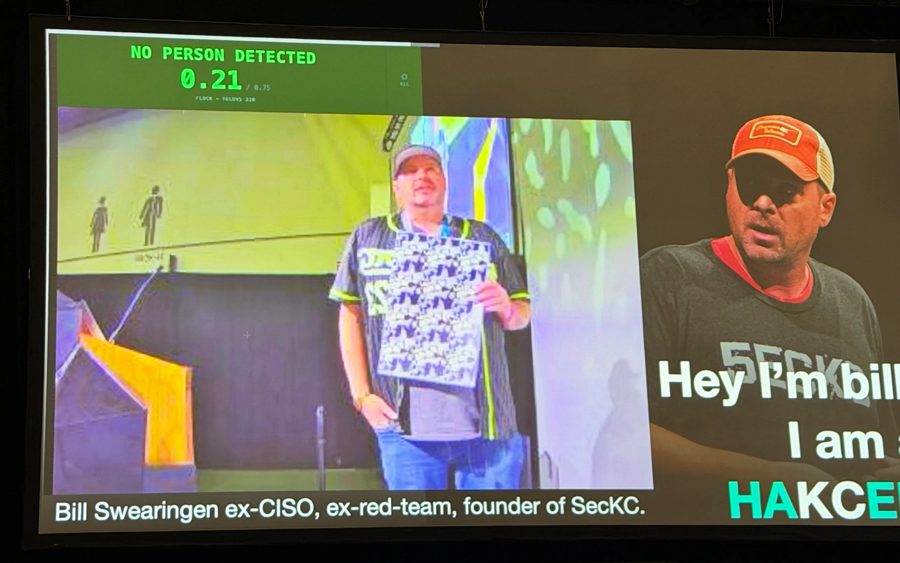
At the annual Defcon hacker convention, cybersecurity professional Bill Swearingen demonstrated a curious trick: a flat panel covered in a bizarre black-and-white pattern was enough to make a computer-vision system lose track of a person standing right in front of a camera.
Swearingen, founder of the Kansas City security community SecKC, stood onstage as a person-detection system analyzed the live feed. On the giant screen behind him, the software's confidence score cleared 0.75, the threshold needed to declare that a human being was in the frame. Then he raised the patterned panel. The score began to fall, dipping below the threshold and eventually settling at 0.21. "No person detected," the screen announced in bright green letters — even though Swearingen was plainly visible to everyone in the room.
The project behind the demo is called noRecognition. For the past year, Swearingen has been searching for patterns that can confuse the computer-vision systems used to identify people. The end goal is to create clothing that makes the wearer harder for AI surveillance systems to detect. It's a fascinating idea, but as the author notes, it remains very much a work in progress.
One important nuance: the camera was not trying to identify Swearingen by name or face. Surveillance systems typically involve several separate layers of AI-based detection, and this particular attack targeted the layer responsible for simply detecting the presence of a person in the frame. The system still received the camera image, but it no longer classified the scene as containing a person above the configured confidence threshold.
The demonstration felt like a low-budget magic trick to the audience, but it highlights a real vulnerability in modern computer-vision pipelines. While the current patterns work only under controlled conditions and are far from becoming practical anti-surveillance clothing, the proof of concept shows how fragile these systems can be when confronted with adversarial visual input. Swearingen's ongoing research aims to push this further, exploring how everyday garments could eventually incorporate such patterns to help privacy-conscious individuals evade automated tracking.