GNOME 50 wins back a COSMIC user: VRR and fractional scaling are now defaults
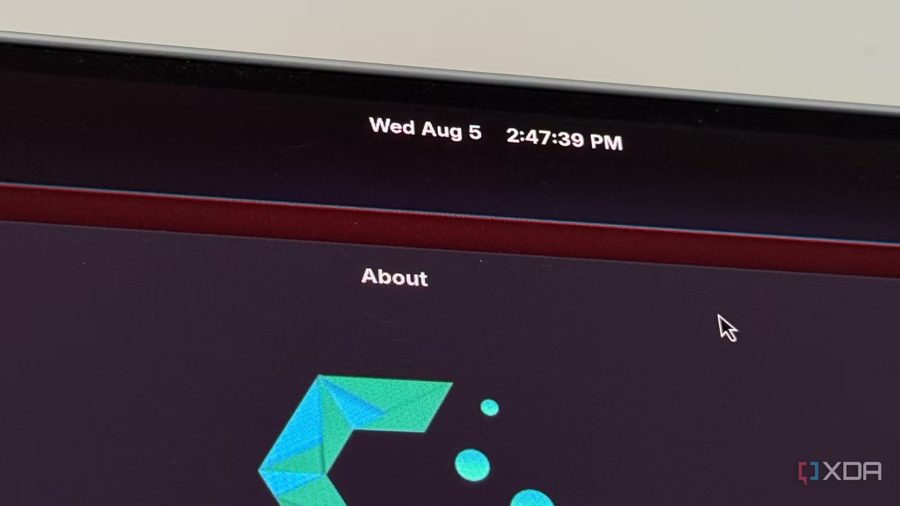
GNOME 50 made two long-awaited improvements standard, and that convinced the author of this piece, who had previously switched to COSMIC, to come back. Variable refresh rate (VRR) and fractional scaling, once experimental features, are now enabled by default and accessible through the regular system settings.
VRR first appeared in GNOME back in version 46, but enabling it meant manually adding a string to the experimental-features key in Mutter settings and logging out and back in. Most users never even knew it existed. COSMIC, by contrast, exposed the toggle since its fourth alpha, offering a choice between always-on mode or enabling it only for fullscreen apps.
In GNOME 50, the "experimental" label is gone, and the option has moved to the standard display settings section. On distributions that hadn't enabled it downstream, VRR is now active right after installation. One new addition is a low-latency cursor: the pointer updates independently of the application's frame rate, staying smooth at the display's maximum refresh even when a game runs at low FPS. This fixes the issue where moving the mouse during a 45 FPS scene on a 240 Hz monitor turned the cursor into molasses. COSMIC, according to the author, has no equivalent feature.
That said, GNOME's design still lags behind: COSMIC's automatic VRR for fullscreen apps is a more sensible default for a desktop used for gaming. In GNOME, the toggle works per monitor, which the author calls clunky but an acceptable compromise.
Fractional scaling is the second major change. Previously, 125 and 150 percent scaling required manually enabling scale-monitor-framebuffer, and XWayland apps often looked blurry. In GNOME 50, this became a proper setting, removing one of the biggest complaints about the environment in recent years. Users can now pick intermediate scaling values without editing config files.
The author acknowledges that COSMIC remains a strong desktop with excellent hardware support, particularly with multiple high-refresh displays. However, returning to GNOME felt like the right move: two key annoyances are gone, and the familiar ecosystem and stability tipped the scales.