Forty battery Zigbee sensors don't strengthen your mesh — here's why they drop offline
Deploying dozens of battery-powered Zigbee sensors across a home doesn't reinforce the mesh network — it can actually trigger widespread disconnections. The catch is that such sensors never act as repeaters or forward traffic from neighboring nodes, so adding more of them brings zero resilience to the network.
The Zigbee ecosystem defines three device roles, each affecting data flow differently. The coordinator serves as the central brain and gateway, such as a USB dongle or hub. It manages security keys and channel assignments, and only one is needed per network. Examples include SonoffZB, SkyConnect, or Homey.
A Zigbee router is a mains-powered node — a smart plug, an in-wall light switch, or a dedicated repeater dongle. These units must stay powered 24/7, maintain routing tables, and relay data packets from adjacent devices. They are the ones that extend and strengthen mesh coverage throughout the home.
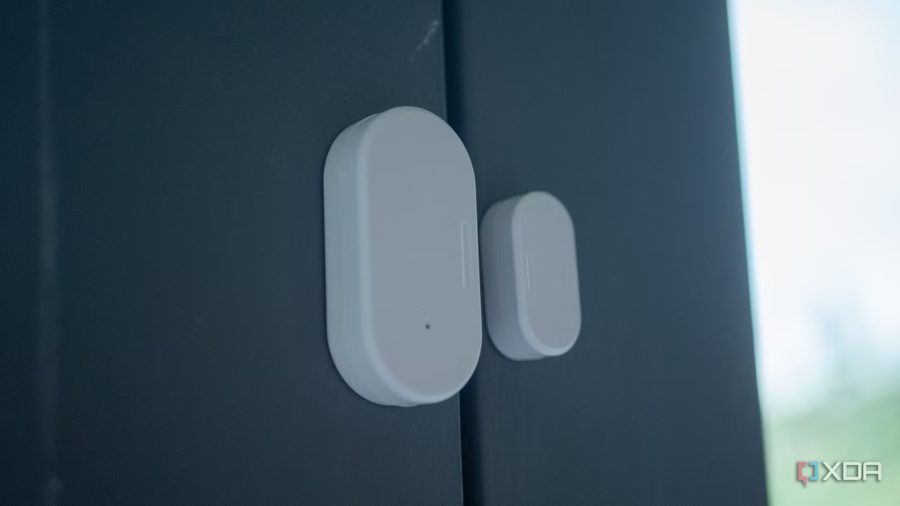
End devices, or ZEDs, are battery-operated sensors: motion detectors, contact sensors, or climate monitors. They only report local state changes and then immediately drop into low-power sleep states. As a result, they cannot perform router functions and do not expand the mesh, since they are not constantly active.
There is also a hardware constraint: coordinators and routers have a fixed memory limit for the number of end devices they can maintain simultaneously. This is often between 10 and 32 direct connections, but the exact figure depends on the specific model. Without active routers to absorb those end-device connections, the coordinator quickly hits its hard cap and starts rejecting new joins.
A house filled with 40 battery-powered Zigbee sensors has zero mesh resilience — without mains-powered routing hardware, half of the devices may stop responding or vanish from Home Assistant. Understanding the strict functional boundary between routers and end devices is what separates a flaky smart home from a bulletproof automation network.