Falcon 9 Stage Blasted an 18-Meter Crater on the Moon — NASA Releases Images
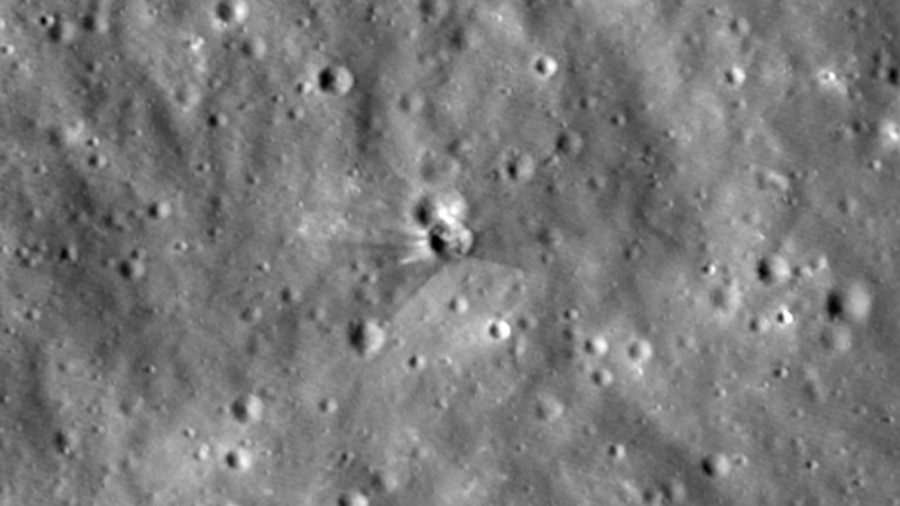
NASA's Lunar Reconnaissance Orbiter (LRO) has captured images of a crater left by the impact of a Falcon 9 second stage on the Moon. The crater measures approximately 18 meters in diameter.
The Falcon 9 launched in January 2025, carrying the Blue Ghost lunar lander built by Firefly Aerospace and Japan's Resilience spacecraft from ispace. After deploying both payloads on their lunar trajectories, the rocket's second stage lacked sufficient fuel to perform a braking burn and return to Earth, where it would have burned up in the atmosphere. The fragment, roughly the size of a small house, instead headed toward the Moon and struck the surface at a speed of about 9,000 km/h (5,600 mph).
LRO's narrow-angle camera, which can resolve fine surface details, needed several days to photograph the impact site. The images reveal two distinct types of ejecta rays, indicating differences in lunar soil composition at various depths. Light-colored rays consist of fresh material excavated from deeper layers, while darker rays come from surface regolith darkened by prolonged exposure to cosmic radiation and micrometeorite impacts.
Rocket stages have left marks on the Moon before. In 2022, LRO documented a rare double crater about 20 meters wide, caused by a previous impact. The new images add to scientists' understanding of how artificial objects interact with the lunar surface at high velocities.