Concorde's 74-minute eclipse record: how a prototype beat ground observations by 10 times
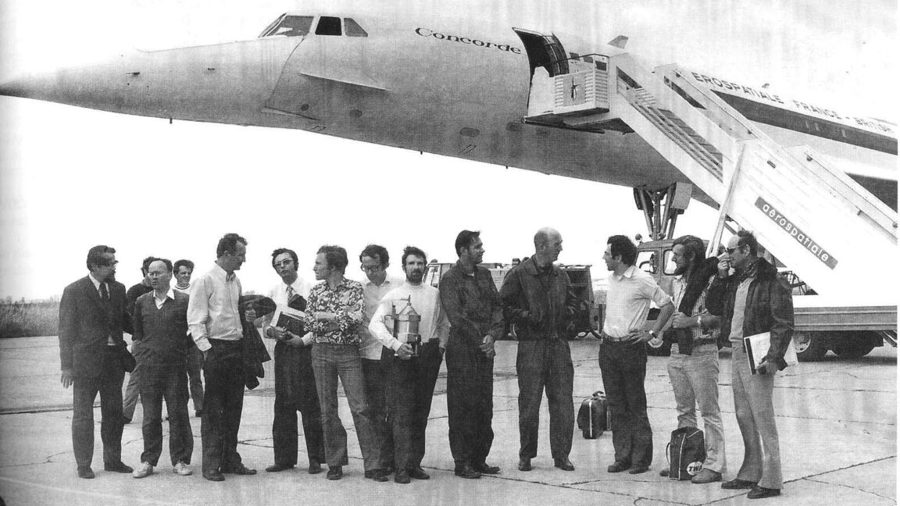
The National Air and Space Museum of France, housed at Paris-Le Bourget airport, displays the supersonic Concorde F-WTSS 001 prototype. Behind its long nose, the fuselage bears a painted map tracing the path of a total solar eclipse that crossed Africa in June 1973. The marking commemorates a world record: eight scientists aboard this aircraft observed totality for 74 minutes.
For context, the maximum duration of totality on the ground is about 7.5 minutes in equatorial regions. The upcoming solar eclipse on August 12, visible from parts of Europe, will offer just over two minutes of totality from the ground. The Concorde flight thus exceeded the ground-based figure nearly tenfold.
The project was initiated by Pierre Léna, who in 1972, a year before the event, proposed using the prototype to chase the lunar shadow. Léna had prior experience with astronomical observations from high-altitude aircraft. The 1973 eclipse occurred near the equator, where the Moon's shadow moves slower, yet still at more than 2.2 times the speed of sound. The only large aircraft capable of matching that speed was the Concorde.
Léna recalls that the 001 prototype made its first supersonic flight in 1970, generating extensive press coverage. By 1972, he decided to approach André Turcat, chief of test flights at Aerospatiale in Toulouse, about using the 001 to follow the June 1973 eclipse. Turcat showed keen interest, leading to the successful mission on June 30, 1973, whose results remain unmatched to this day.