China’s LandSpace nails ZQ-3 booster landing after December crash — now the only nation with both public and private reusable rockets
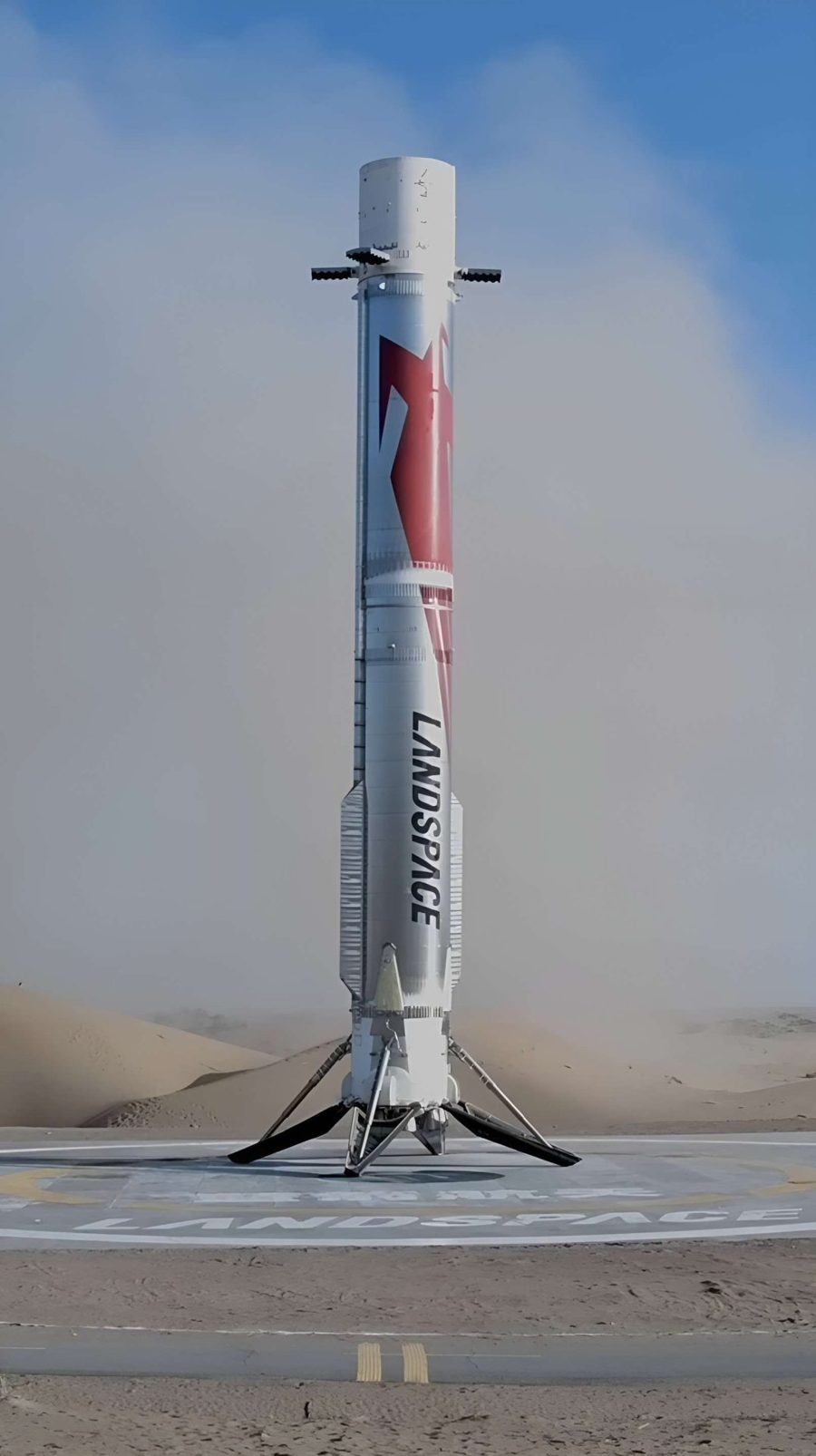
Chinese private space company LandSpace has successfully recovered the first-stage booster of its Zhuque-3 (ZQ-3) rocket, making it the second entity in China to achieve this feat after the state-backed China Academy of Launch Vehicle Technology (CALT) and its CZ-10B rocket. This is a landmark step for the country's rapidly evolving space industry.
The achievement comes just months after a failed landing attempt in December 2024, when the ZQ-3 booster crashed. Now LandSpace has corrected the issue and demonstrated the technology works.
The ZQ-3 is a medium-lift, two-stage methalox (liquid methane and liquid oxygen) launch vehicle with a stainless steel hull. The first stage is powered by nine TQ-12A/B engines, while the second stage uses a single TQ-15A/B vacuum engine. Payload capacity is 12,500 kg when the booster returns to the launch site and lands on its extendable legs, rising to 21,300 kg in a fully expendable flight mode. The booster is designed for up to 20 reuses.
LandSpace's success comes as China pursues ambitious orbital plans. The country has reserved over 200,000 orbital slots with the International Telecommunication Union (ITU), with some estimates putting the total at 244,000. Now China appears to be getting serious about filling those largely vacant slots, and private companies like LandSpace are playing a key role.
With this achievement, China becomes the only nation in the world where both public and private entities have successfully developed and flown reusable rockets — a milestone that puts it ahead of the United States, where only SpaceX (private) has achieved booster recovery, and ahead of other nations where reusable rocket technology remains solely in government hands.